EXPLORING NEPAL : A SEARCH FOR PREHISTORIC MAN IN THE TIMELESS HINDU KINGDOM

 Farmer’s wife works in the field while husband plows the field and baby sits.
 Himalayas
 Rhino cross the Karnali River in Western Nepal at first light of day…
 Girl in the Mustard Seed is a celebration of color, I looked for this the whole trip and when I saw this color I knew I had finally arrived

 This child foragers for feed for the animals, building supplies and sleeping mats.
At the turn of the century, 1999 I went to explore Nepal for a month looking for prehistoric man, circ. 1500 A.D. Life in Nepal for many is a day to day event, in the village each morning folks walk a little further than the day before to gather wood, foliage or water. The land is denuded in places, trees without limbs and cold. People work all day so they can survive another. In Nepal, life is not distracted by possessions, but a Polaroid camera’s instant image was priceless because it allowed the villager to freeze-frame time for a new child, soon-to-be teenager, a rarity indeed and great Karma! Still my search for Prehistoric man took many turns as we weaved through the Himalayan Kingdom starting out in Kathmandu going east to Chitwan Animal Park where we rode elephants in search of the elusive Tiger.  Tiger Hunt in Nepal
 Highest point in the world.
From there we went North toward Everest (above) and Base Camp and we camped within sight of the world highest perch, sleeping cold at near 9000 feet from there the trip turned toward TIBET, or the Freedom Bridge which is the now border of Communist China, in the distance you could see the hillside city of Lhasa, home of the exiled Dali Llama. There is a lot of geothermic energy warming the water there and that could be the best place in Nepal for a shower including Kathmandu. Many village homes along the ancient Silk Road from India to China were mostly sticks and foliage without chimney and smoke escaped through the leaves. In colder climes, I glimpsed prehistoric life when in our trail we found common housing, sharing walls and living in multi-levels, resembling the pueblos of the American South West
  Not unlike pictures of ZUNI Pueblo in New Mexico.
and I came closer one day when I walked past a house next to the stream where a man was pounding grain with a rock to reduce it to flour. Ancient man found that practice useful, but the rock deposited in the meal, eventually reduced the teeth of the eater so they could only eat the mush anyway. I think my best view of prehistoric times, was one morning we awoke next to a stream, fog hung to the hills, and a fisherman in his dugout canoe moved skillfully around the stream checking his traps. Nepalese fisherman checks his traps early morning. While there were many wonderful scenes of the Himalayan Range but life became basic the further one hiked from roads, that became more apparent as we walked into Annapurna Conservation Area where there were no roads, anything that went there either walked or was carried by someone.
 Women on Annapurna Trail

My favorite scene was the straight chair tied to the back of a son who carried his mother down the rocky and uneven trail. Large pack trains of burros and mules each carrying large tins of kerosene to be burned for heat and light, a great luxury, where it was going. We hiked in a couple days before finally reaching a small village before turning back toward the road, my group with a dozen participates was cared for by 5 camp boys and 16 Sherpa or bearers. During the night one of the camp boys would stay awake and provide security for the group with his vigilance and his Gurka knife. It was not infrequent that a tent was sliced and something stolen and occasionally someone attacked, but seldom. In the village, I awoke with the sun and started walking about when I ran into two small kids who adopted me immediately, taking me home and insisting I go into this basement room of their home which was pitch dark, I couldn’t see anything but as my eyes adjusted I was able to figure out it was some sort of ceremonial area with figures on the walls but I could see no detail. So in the old film days when I mounted my flash and fired that shutter I created a picture I was unable to see until I got home.
 Buddist Shrine was the ceremonial room for the family elders. Further encounters in the village was mostly school kids getting ready to run off to school and parents working to get them off. Everyone was curious and friendly, as I moved past the school and into the downtown of shoppes, I wondered about the uniforms all the school kids wore and later was told that the uniform levels the playing field for all kids rich or poor. English is the second national language of Nepal, so all the school kids are delighted to practice on you.
 Road crews in western Nepal.
 Budda’s Path to Enchantment began here.
As the expedition grew closer to India, the terrain grew flatter, and a short distance from the Indian-Nepal border we stopped at a large archaeology site where a young man named Siddhartha Gautama, who later became Buddha, was born in 623 B.C. in the famous gardens of Lumbini he began his Path toward Enchantment. A suburb of Kathmandu, Dunbar Square, which was built 1000 years ago, and still stands in spite of pesky earthquakes that have leveled other regions, there we wander the streets and enjoy the shrines.  But the Monkey Temple also called, Swayambhunath, was perhaps the most amazing in making pictures, these monkeys thought to be re-born monks basically can do whatever they want. So they were spoiled and very human-like and I stalked this one mother and her child and they sat, eyes closed for a half hour, then finally mom opens her eyes and stares at me and suddenly the Madonna scene from my own religious up-bringing stood before me and I was humbled.
 There were many humbling moments during this cultural experience, mostly the happiness of a people who we considered had so little. But in the end, the monkey had it right, life centers around family and the happiness that family brings.
 Tea shop owner sends son off to school. Hard work is a means to that end and every day is hard, then you grow old… By trips end, this roadside marker I camped nearby in Western Nepal, was the closest I came to the prehistoric Nepalese, but they had taught me that I was the dinosaur…
 Kids on the old Silk Road…
<!–
SOUTHWESTPHOTOBANK.COM – Images by Phares K. Weis
NEPAL – Images by Phares K. Weis / SouthWest PhotoBank.Com


<a href=" SPANISH TRANSLATIONS:
TOHONO O’ODHAM TOKA TOURNAMENT IS A TOAST TO THE PAST AND REVIVAL OF OLD SOCIAL GAMES …


The Tohono Oodham have resided on their land since time began. Before history was written, these people are known as the Hohokam, around 1100ad, ballcourts hosted games involved the first rubber ball, players wore pads for protection, but losers are thought to have lost their heads as well as their wager. Things have changed, the Tohono Oodham today are reviving their Toka Tournaments, very popular in the 1800’s, it is a women’s game and the “Toka field” is off limits to men.
 It begins with a gathering of all the women who with their mesquite sticks stand in the circle and sing their cultural song sung only by women, only for the Toka.
  Then Toka takes a turn toward hockey or lacrosse, two eight women teams, face off and the referee drops a puck-like two wood cylinders tyed together, which allows the sticks to hook it and fling it down field toward goal.
  GOAL…player picks up puck after goal
Two things you need to know now, the dust can be blinding, and there are no sidelines…which means if you are watching, you are in-play. Blinded by the dust, you may be between the players and the goal, and I saw many spectators chased. I stepped in a gopher hole and took a dirt bath, the safe place was behind the goal. The “Strong Women” team (light blue) says they are just a bunch of friends from all parts of the Nation and they banded together as a team, the other team was mostly San Xavier players, so it varies whether teams reflect regions rather than dream teams.
  Before the contest, each team approaches the shrine where they leave their traditional wager, shell beads or Gatoraide which the winner picks up after the contest.
 Throughout the morning the teams battled up and down the field, trading off victories and women enjoying the coming together and the competition. The Topawa Cultural Museum Toka Tournament was the 8th since December. Game prep had placed fencing around saguaros and trees so important and dangerous desert obstacles were averted from play.
Editors Note: When I arrived there was a sign which said, “No Photography or Videography”, no teams had yet arrived so I asked the referee and organizer whether that was standard procedure ( is this sacred? ) No, she said, they had not been able to get signed releases from the participants so they put up the sign. (They hadn’t ask) So I said, when the teams arrive do you mind if I ask the teams and their coaches whether they mind if pictures are taken. So as folks arrived, I asked, got permission and no one minded. In fact, a few liked the fact the pictures would be on the internet, so they could see them. I relayed that info to the referee and she said she was going to take down her sign, since permission was given. Mid-morning a fella crossed (no-man’s land) to approach me and tell me he needed to confiscate my camera. Oh yeah, why? He said there was a sign up saying no photography. I took the high road and pointed out I had permission from the coaches, players and organizers, pointing out the referee who okayed my photography. He then got rude, said, “just listen, there is no photography” he said, “that is what the museum is all about” he concluded. I’m not sure what he meant, but since I had all the photos I needed, I left. Remember, there is always some guy like that who is puffed up with his own self-importance, so never surrender your camera, hang on to your flash card also. It is always good to talk with your subject and respect traditions and get their permissions so when pointless stuff like this happens, you know it is his problem and not yours. Lessons learned ? If photographing on the reservation it often helps to call ahead and ask if photography is allowed, regardless of what you are told, situations may vary and in all cases just respect individual rights. 
SOUTHWESTPHOTOBANK.COM TOKA TOURNAMENT GALLERY…
<a href=" SPANISH TRANSLATIONS:
MONUMENT FIRE DEFIES EXPERTS “DOES WHATEVER IT WANT TO…!” WILDFIRE THREATENS HOMES
 THE MONUMENT FIRE SEEN FROM 7th STREET IN SIERRA VISTA.
THE BORDER WILDFIRE THAT HAS GROWN TO MONSTER SIZE IN HIGH WINDS AND HAS THREATENED HOMES AND BUSINESSES IN SIERRA VISTA, still cannot be turned and today threatens high-end homes in the southern Arizona community. High winds have allowed the mountain-sized-fire pretty much to come and go as it pleases and has burned more than fifty homes-more than those destroyed by the huge Wallow Fire which has cleared a half million acres of Northern Arizona and is now burning into New Mexico.
 ARMY CARGO LANDS AT SIERRA VISTA MUNICIPAL AIRPORT ON RUNWAYS SHARED BY LIBBY FIELD AND WILDFIRE AIR SUPPORT
 NORTH CALIFORNIA HELITEC CREW HEAD OUT TO FIGHT FIRE.

The 50,000 acre man caused Monument Fire is marginally contained and new firefighters and equipment arrive daily as freed from other fire assignments elsewhere in the Southwest, the Monument fire is becoming the fire to stop as bigger fires reach some containment. Livestock and wildlife has been burned out by the southern Arizona blaze and hundreds of pets and people have been evacuated from the path of the blaze which has jumped back and forth across AZ State Route 92 which is now closed south of Sierra Vista.  Further south homes and businesses have burned from high winds early in the week and the Arizona National Guard has been sent into those area to prevent looting, and to protect private properties.
GABRIELLE GIFFORDS SENDS GREETINGS TO TUCSON

 Gabby with her mother, Gloria …

These photographs released 6/12/2011 by Gabrielle Giffords (DAZ) are the first images of the Congresswomen since the January 8th Shooting in Tucson Arizona. Giffords was wounded in the mass shooting at a Northwest Tucson Shopping Center which took the lives of six people, including a 9 year-old girl and a federal judge who had stopped by to say hi, 13 people were wounded including Gabby. Giffords has had numerous operations and is now in rehabilitation recovering in Houston Texas. Gabby says she is working hard every day to get home to Tucson Arizona…
UPDATE GABBY’S FIRST TUCSON VISIT 6/18/2011 SINCE JAN 8TH SHOOTING…MANY MORE TO COME
Background of the photographer
The photos were taken by P.K. Weis of http://www.SouthwestPhotoBank.com. He has worked as a photojournalist in the Southwest for about four decades. He worked at the Tucson Citizen for 36 years, including 30 as photo editor, until the paper closed in 2009. Weis has known Congresswoman Giffords for more than a decade, since before she was first elected to the Legislature.
The photos were taken May 17 at TIRR Memorial Hermann Hospital, the day after the launch of Endeavour and the day before she had her cranioplasty.
Statement by the photographer
“Any photographer in the country would have loved the opportunity to take these pictures and I was delighted to be asked. I’ve known Gabby for more than a decade and they asked me to do it because they wanted someone who was not a stranger to the congresswoman – someone she would be comfortable around. The photos were taken in her room and in an outside area of the hospital.
“In addition to the congresswoman, her mother, one of her staff members and a close friend were there. Doctors and nurses also came in and out.
“It was very inspiring to see how much she had recovered in 4½ months. I was excited to see her and to see her smile. She was glad to see me, was in a good mood, smiling and laughing and seemed to enjoy the experience. I certainly did, too.

ROCKIN and ROLLIN in NOGALES BORDER PATROL HOPES NEW WALL ALLOWS AGENTS TO END ATTACKS


HOMELAND SECURITY IS WORKING TOWARD GREATER TRANSPARENCY
ALONG THE NOGALES BORDER WALL
 Homeland Security Agents seek greater protection from Border Bandits
A $12 Million project to replace nearly 3 miles of fencing running through Nogales between the American State of Arizona and the Mexican State of Sonora will allow Border Patrol Agents to see who is attacking them and from where. Pelting Homeland Security Trucks with Rocks has become a strategy used to get agents to move on so someone or something can move across the border. Agents fearing for their lives and their vehicles have been armored over with grating capable of protecting the agent and his vehicle, they have firing ports that allow the agent to return fire when a life is endangered. The new fence will allow the now-armored agents to find their attackers and marginalize their impact, calling in backup.

Meanwhile, the new wall project which began in March, on both ends of the city-working inward-is scheduled to be completed in mid-July by Granite Construction who received the bid. Granite in working with the U.S. Corps of Engineers who has hired security contractors armed with less than lethal pepperball guns to provide protection for Granite employees and their equipment. Meanwhile, the projects runs through the two country city of Nogales, so both Nogales Sonora and Nogales Arizona have police on the scene providing international security and early Wednesday morning the Sonora Police stopped everything while they powwowed with their Arizona counterparts and various representatives from the Corp of Engineers and the Border Patrol.
 The metal is dropped across the border by a front loader and pickup trucks, stop and load it up and quickly clears the right of way.

Apparently Mexicans were attaching chains to the fence and pulling away mesh which they were selling as scrap metal and they were working ahead of the destruction on the US side and Sonora wanted to know if Arizona was aware of this situation. Apparently they were, Mexico appears to have gotten the bid to recycle the Border Wall, the wall which US citizens paid between $400,000 to $4.5M a mile and averages $2.8M is being scrapped in Mexico. If the initial costs is not metal, what else could it be?, erection?, oops, construction costs?) Because the new wall extends 8′-10′ beneath the surface officals hope this will serve as a deterrent to tunneling beneath the wall in the downtown Nogales area.
 The Border Patrol’s Tucson Sector has 71 miles of pedestrian fence, up from 11 miles in 2000. There is 183 miles of vehicle barriers, up from two miles in 2000. The Border Patrol hopes to replace sections of the old landing-mat fence in Douglas and Naco, AZ. The old landing-mat fences were erected in mostly urban stretches of the U.S.-Mexico border during the mid-1990s by Border Patrol agents using surplus government materials. The new fence has been erected with new materials by construction companies paid millions by the federal government. The US spent $2.4 billion on 264 miles of pedestrian fencing and 226 miles of vehicle barriers between 2004-2009. At $4.14 million per mile, the Nogales fence-replacement project will cost an estimated $6.5 billion to deploy, operate and maintain the fence over its estimated 20 year life.

 Old Fence shows years of patching
In 1907, President Roosevelt set apart as a public reservation all public lands within 60-feet of the international boundary between the United States and Mexico within the State of California and the Territories of Arizona and New Mexico. Known as the “Roosevelt Reservation,” this land withdrawal was found necessary for the public welfare as a protection against the smuggling of goods. NEW YORK TIMES BORDER TOPIC PAGE CLICK HERE

<!–
NOGALES NEW BORDER WALL – Images by Phares K. Weis / SOUTHWESTPHOTOBANK.COM
This video gets lots of interest in light of America’s investment in Border Fence. Don’t forget, Arizona’s Governor now wants to build a second wall.
THE OTHER SIDE OF IMMIGRATION ….
<a href=" SPANISH TRANSLATIONS:
WYATT EARP NO SHOW FOR TOMBSTONE’S EARP DAYS LETHARGY SWEEPS MEMORIAL DAY EVENT

 VINNY and ESTHER SKANDUNAS
 SAN DIEGO 12 pose on the boardwalk of Tombstone AZ…

For the second time in two years, the WYATT EARP LOOK-A-LIKE COMPETITION “was scratched” because no one signed up. What happens when you throw a four day event no one shows up to compete as the reigning “WYATT EARP” at the premier OLD WEST location with all the bragging rights, TOMBSTONE, AZ, Home to the ShootOut at the OK Corral, Boothill, Crystal Palace, the Birdcage, Kevin Costner’s “Wyatt Earp” and Val Kilmer’s Doc Holiday in “TOMBSTONE”. Hundreds of people come from all over the world to walk in Wyatt Earp’s footstep, to follow Earp, Doc Holiday, brothers Virgil and Morgan strutting into the OK Corral and telling the bad guys to throw down their guns and throw up their hands, “They’re under arrest and goin to jail.” Its possible folks feel Earp’s footstep may be too large and haunting to settle in for an entire year because there was many EARP want-a-be who enjoyed getting out for the long weekend and living the past for four days, perhaps they thought “walking on water” for an entire year might be too much.
 Still for two years running, the competition was scrapped while the competition for dance hall girls, specialty entries like 1992 Tombstone Movie Actor, and town folks were very competitive and had the judges pulling on their beards and squinting in the late May glare of day.
 In the crowd, I found a “dance hall” mother with her “cowgirl” daughter, a Pinkerton Agent, the Duke was there, Johnny Ringo, Ike Clanton, John Behan, Curly Bill Brocius, Big Nose Kate, Johnny Rebs, Mexican Bandiditos (one was really ugly) and Charros and yes, Morgan, Vigil and Wyatt were there so were there wives and they strolled the boardwalks and occasionally would pause and reflect the scene in “TOMBSTONE” when Kurt Russell lines up the family in a window reflection and marvels at life’s blessings. “We’re from San Diego!” for the past four years the group of twelve has been coming to Tombstone and “living the dream”. For many they just love the old west and the legends, and for some specifically the antics of one person at a time and place in history. How does did this group get its’ start? “It all started with a vest”, says Vinny Skandunas. “He made one for himself, the next year he made another, and a third vest was made the year following and the rest, the boots, jackets, sidearms, knives, hand fans, corsets, dresses just followed and here we are again, Esther Skandunas says.
 specialitycatagoryjudging


I tapped one cowpoke’s shoulder one year to ask a question and found he spoke no English, strictly German, but looked like he belonged and was born there. The bartender at the Crystal Palace remembers one very slow night when ten cowpokes wandered into the bar and quietly settled at the bar. He didn’t know a one of them, but they looked the part, it wasn’t til the third round when they started getting loud and very German. “‘It was great” says the bartender, “they had a great time til closing, so did I and as they left they said they’d be back, but they haven’t been back yet. The APACHE SPIRIT RANCH, three miles north of Tombstone, opened its door last fall and was already completely booked in April. Early on it catered strictly to Europeans, mostly Germans and Swedes, who like the owner grew up on tales of the American West and the Indian. Wanting to build a bridge between the noble Redman and White man, the Apache Spirit Resort has a couple Chiricahua Apache, a Blackfoot, a Hopi and some World-class Hoop Dancers who visit the ranch and teach the Europeans their ways of life. The last week in September and the first week in Octobers, the Resorts will celebrate the Native American’s contribution to the Old West, with different programs each night. While the Resort’s nightly stay is over $200 a night, that does include all meals, campfires, gunfights and programs, including the horseback outings both morning and evening and you get to meet real indians. The seventeen rooms lineup with old west fronts like the Post Office, the Newspaper, Kittie’s Bordello, with the multi-room suites going for between $400-$500 a day. The onsite Trappmann Saloon has a glass floor highlighting the old ranches root cellar where its residence reportedly hid from raiding APACHES and a bare bulb illuminates the supply room and a skeleton. “It’s an Ebay skeleton ! It came in pieces and took forever to piece together.” Last week, the Resort held a horseback wedding for a Minnesota couple, they can do it all, wifi anywhere for laptop packing guests, even the pool area.
  Still Americans are welcome, “Americans are so easy going! says the very perky German office manager, Germans complain so much. We enjoy the Americans visits so much, Germans are always so picky and always complaining about the service, she adds, “Americans are so laid back.”
 Yvonne
So TOMBSTONE, AZ is at a crossroads. Since the shooting at the OK CORRAL, the town has depended upon volunteers (Lion’s Club) to run the show, local Gunfighter groups participate and the Arizona Rangers have provided security and traffic control and apathy has slowly eroded the OLD WEST Experience probably because more and more is asked of fewer and fewer (thirteen, I’m told) people. This year some folks were doing four jobs, daily programs were nowhere to be found, phone calls in advance assured callers that locals were clueless, no ads in local newspapers and the website was dated. The question is Why Kill the Golden Goose? You have the franchise on something folks come from all over the world to see, to participate in and to hear and feel. They love TOMBSTONE, AZ ! Make it a good experience and they love it and return. Make it a bad experience and slowly nobody comes back. It’s an easy choice, and the time to choose has come.
Take steps to save the past now and Tombstone’s future. Encourage the traveling Old West re-enactors, trick gunfighters, the folks from Virginia City, Nevada and Lincoln, New Mexico, western bands, beer gardens, let the old west wash over you, drink deep and quench your thirst.
HOW TO SURVIVE TUCSON SUMMERS ? MT LEMMON SKYCENTER A COOL PLACE TO ESCAPE SEASONAL GRILL

 Mt Lemmon SkyCenter is left over Air Force Radar Base with Command Control Communications for Titan Missile Bases deployed during the Cold War in the Tucson Basin.
 Hawk Eye Mark Kimble points the way…
Our recent outing to the Mt Lemmon SkyCenter was probably the most refreshing experience I have had in months. After a slide briefing and a tasty light dinner the group moved from the Education Center to the mountains western edge to enjoy the sun set on Northwest Tucson and to look for the amazing “green flash” … As darkness fell we familiarized ourselves with starfinders and exploring the constellations in the sky overhead with binoculars and then moved inside to explore with the 32 inch scope. It continued to get chilly and before the program ended around 10 pm, it was flat out cold. Perhaps, the most amazing view we enjoyed was the large scope’s view of Saturn. We also visited various nebuli edgewise or otherwise, enjoying many age old views dating back to the beginning of the universe …
MOUNT LEMMON SKY CENTER PUBLIC OBSERVING
SKY NIGHTS … 5 HOURS 7-25 LIGHT DINNER $48
The SkyNights experience is offered nightly throughout the year. Learn the constellations, observe interesting atmospheric phenomena, and view the wonders of the cosmos from a high-quality astronomical site using an outstanding new 32-inch Schulman Telescope…Arizona’s largest dedicated public viewing telescope !
ASTRONOMER NIGHTS is a Mt. Lemmon SkyCenter program in which visitors observe as professional astronomers for 1 or 2 evenings. As a visitor for this extended observing program, YOU become the astronomer investigating the cosmos and deciding how the night unfolds. This unique astronomical experience for $750 a day includes: observing at a telescope with an astronomer/guide, acquiring high quality data, lodging on site in astronomer dormitories, and data and image processing by astrophotographer Adam Block.
YOUTH OBSERVER NIGHTS SkyCenter provides programs to youth groups (middle school and older) to learn about the night sky. SkyCenter staff will modify our standard program for your group based on your needs. SkyCenter has worked with school groups, girls scouts and boy scouts and clubs. Groups have access to the 20-inch Jamieson telescope or the 32-inch Schulman telescope. These programs can be overnights as well as one evening.
Discovery Days is a summer/fall day-time weekend opportunity to escape the summer heat. UA Science hosts various hands-on and family-oriented activities at the SkyCenter such as investigations of hummingbirds, solar observing, searches for near-Earth asteroids, and tree-rings. During 2011, Discovery Days will open the facility the third Saturday of June, July, August and September from 10 am to 4 pm. Join in various activities and learn about the history of the site while escaping the heat. You can stay for the SkyNights program (separate cost) to complete your investigation of science on the mountain. $8 adult and $5 children (12 and under)
SKY ISLAND CAMPS AND WORKSHOPS explore the science and culture of the unique sky island environment, from the forces that built the mountains to the impact of fires to the amazing night skies. Cost includes use of telescopes and telescope operation, rooms (double occupancy), and all meals. Adult-to-camper ratio is 1:6 with separate accommodations (with supervision) for male and female campers. You’ll leave from the UA early Monday morning and return late Friday afternoon. The exact schedule for the camp is weather dependent, but suggested activities include time on the 32-inch Schulman telescope, a Laboratory of Tree Ring Research project, and exploration of geology, ecology, art, and photography. This is a UA Science program in conjunction with Biosphere 2. For more information, visit http://www.outreachcollege.arizona.edu/youth.
ASTROPHOTOGRAPHY with ADAM BLOCK June 18
THE SkyCenter’s Astrophotography program is a unique and awe-inspiring opportunity to peer beyond the blue horizons of southwestern skies and explore the astronomical wonders of the Universe. We’ll not only looking through the telescope but also capture the views through a CCD camera. Reknown astrophotographer, Adam Block, will take you through the process of how he creates these amazing images that have earned him worldwide recognition. During this six hour program you will navigate the night sky with binoculars and skycharts then gaze at spectacular planets, galaxies, and nebulae with the 32-inch Schulman Telescope. Cost: $75/person

 Saturn Astrophotography by Adam Brock on the Mt Lemmon SkyCenter 24 inch telescope

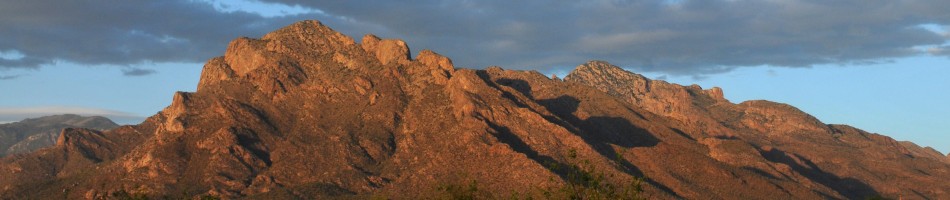
 Pusch Ridge viewed from Tucson NorthWest side is an hour’s drive and at least 35 miles away. Mt Lemmon distant green ridges at left
“ORDINARY CITIZENS” STAND TO BE COUNTED AS HEROES AMONGST US : “GOOD STUFF” SAYS GIFFORDS
 (from left) Bill Badger, Patricia Maisch, Roger Salzgeber the night before Endeavour launched.
THE GOOD GUYS got their first break January Eight in that Tucson Arizona Safeway parking lot when the deranged gunman aimed at Col. Bill Badger’s head and missed. Bill ducked and felt the bullet graze the top of his head as his blood began to flow, Bill and Roger Salzgeber heroically charged the gunman tackling him to the ground and giving Patricia Maisch the opportunity to grab the fresh clip from the struggling gunman hands. Ending the mass murder of six persons and the wounding of 13 others, including Tucson Congresswomen Gabrielle Giffords. Patricia Maisch says she’s an ordinary person who did nothing more than what anyone else in her position would have done–had they been there. That may be, but I know when I first read of this trio’s deeds I know I got that chill in my spine that I reserve for heroic acts and big doins and I know truly in my heart they are my heroes. Since that day, they have been written about, quoted and ask to comment. They have struggled to return to way things were. For some the spotlight is too bright. Daniel Hernandez, the Gifford’s Volunteer who exposed himself to gunfire giving first aid to the Congresswomen, he was introduced to the nation by President Obama, lent his support to change gun laws has now sought to return to his studies, struggling to be ordinary again. Still others hope interest will fade but Gifford staff member Mark Kimble, sends out an hundreds of updates daily, and fields more than 200 emails a day asking about the Congresswomen recovery. Time Magazine named Giffords “One of a Hundred of the Most Influential People in the World Today”, while in a Houston hospital recovering from her wounds.  The Trio was honored by the Pima County Sheriff’s Department in April awarding each Badger, Maisch, Salzgeber the Department’s Citizen’s Medal presented by Pima County Sheriff Clarence Dupnik.
FOUR MONTHS AFTER ALL THIS STARTED…. these folks have worked to make something good and positive come from this common experience and that has drawn everyone every close particularly Badger, Salzgeber and Maisch to each other, as well as, with the Giffords staff themselves. So when Commander Mark Kelly’s Shuttle launch was scheduled the Giffords staff was able to obtain credentials for the Tucson trio to view the launch from the congressional viewing area. Badger, Salzgeber and Maisch agree a real hero Is someone who blasts himself into space with little regard for their own safety for love of country, much like Commander MARK KELLY and the crew of Space Shuttle Endeavour, named after Captain Cook’s ship that sailed first around the world, another heroic journey. But Endeavour’s Launch represented something else for Tucson, news was Gabby would watch the launch and her doctors thought her well enough to travel to see ENDEAVOUR launch into space to visit the International Space Station and return, heroes indeed. The United States needs heroes-so when Gabrielle Giffords watches the golden glow of Endeavour punching through the low hanging clouds and hoots “Good Stuff”, it is good stuff indeed and everyone deserves to get that tingle in their spine that tells us heroes are amongst us and “good stuff” is goin on…
GOD SPEED, GABBY ! GOD SPEED, ENDEAVOUR !!!
 Patricia Maisch and Bill Badger with wife Sally meet Mike Collins, one of a few astronauts who left sub-orbit. in 1969 Collins flew APOLLO 11 into lunar orbit in the Command Module Columbia and patiently circled while Neal Armstrong and Buzz Aldrin went to the surface in the Lunar Module Eagle. After a day on the Moon’s Sea of Tranquility. Buzz and Neil rendezvoused with Collins and he took them back home to Earth. His instructions were to return with or without the lander crew.
 LIFTOFF ! SPACE SHUTTLE ENDEAVOUR’S LAST WORLD TOUR
  photo is the NASA official portrait of the crew members of STS-134. The crew members are Commander Mark Kelly, Pilot Gregory H. Johnson and Mission Specialists Michael Fincke, Greg Chamitoff, Andrew Feustel and European Space Agency astronaut Roberto Vittori. All mission specialists. Heroes one and all…NASA PHOTO
“ONLY THE GODS CAN SEE THEM” ANCIENT MAN PETITIONS SKY PILOTS
COLORADO RIVER GEOGYLPHS CAPTURES TODAY’S IMAGINATION
BUT CARRIES YESTERDAY’S SACRED HOPES AND PRAYERS
The studies of Yuman People by South West Anthropologist Leslie Spier center on interviews of folks in their 70-80’s in the mid-1930’s about their early life, one chapter dealt with Shaman or religious leaders capable of astro-projection, in this tale the leader slept on when and where to attack his enemy and in his sleep he saw his enemy camped behind a mountain and the next days his warriors found the encampment where it was reported.
The Blythe Geoglyphs or Intaglios may have been a prayer to their God and the drawings an intimate communication with a divine figure who they associated with the river. Nearby another man shape is seen near another glyph of an animal, the light shapes were created by moving aside the rock or soil cement covering of the hard landscape revealing the desert floor beneath it, the removed rock, has been covered by a rock varnish or patina, which darkens the desert floor in contrast to the lightly-colored sand. Three different Arizona Tribes have found explanations for the Blythe Intaglios in their origin stories, the Mohave, the Hopi and the Quechan Tribe who said the large figure was one of a evil giant from the Parker area who terrorized folks living along the river and those folks solicited help from the God of the Sea who saw their plight and sent a large octopus upstream to entice the giant stream side and then two tentacles grabbed his legs and two grabbed his arms and dragged him into the stream and finally in a huge struggle drowning the evil giant and taking the body back downstream to the sea. The octopus is seen in the glyph next to the man drawing whereas the other two tribal versions claim that drawing to be one of a mountain lion who assisted their deity in the creation of the world.
Octopus vs Mt Lion ? I think it has a tail and not eight arms, but I much prefer the Octopus tale…
Geoglyphs are found elsewhere along the River, Patton’s tanks drove over one glyph the tank tracks ran through it damaged in training for WWII. The Fisherman is found on the Arizona side near Bouse north of Quartzite, it shows another man shape, this one with a spear, apparently fishing in the river and the spear’s point is made entirely of quartz, overhead is a fiery sun. There are fish in the stream.
THE FISHERMAN, this geoglyph is found 25 miles from the river next to a trail used by natives accessing the stream and is thought to be a prayer to their God to reward their journey with a bounty of fish for their efforts. In recent years many more glyphs have been found and many more protected by fencing, like the Bouse Fisherman. Elsewhere is the Fort Mohave Twin figures, the Parker Rattlesnake, which is 50 meters in length, the Mystic Maze, The Racetrack, The Shaman or the Horse Intaglio thought to be a commemoration of the first meeting of natives peoples with a horse and is therefore historically much younger in age and distinctly more artful horse design. Horse Intaglio Elsewhere we find mounds, interlocking ovals, geometric circles, Vision Quest Circles and Power Circles have been identified and some studied like the Lizard which is 8 meters in length, the Spider is 8 meters square or the Quechan Stickman which is 25 meters by 6 meters and is incorporated into a prehistoric foot trail according to Boma Johnson’s 1986 BLM study of the EARTH FIGURES of the LOWER COLORADO and GILA RIVER DESERTS. More than two-hundred images have been discovered along the river from Nevada to the Gulf of California. All told, six-hundred-plus geoglyphs have been recorded in the Southwest and nearby areas of Mexico.
SOIL CEMENT PAVES THE TERRAIN ANCIENT MAN PEELED BACK THE ROCK TO REVEAL HIS THOUGHTS TO HIS GOD …
ROADSIDE WEAPONS of MASS DESTRUCTION

 PROVING GROUNDS ENTRANCE
 The Howitzer and the Missile both had a 20 mile range.
 HONEST JOHN MISSILE
The South West is under attack or it may seem so if you are driving along west of the Colorado River on the California side and
suddenly you brake when you notice Weapons of Mass Destruction stashed in the desert just off CASR 95 near the Yuma Proving Grounds, 32 miles north of Yuma.
A roadside pullout allows you to wander through Vietnam-era self propelled howitzers, World War II tanks, missiles that ended the Korean Police Action and the smallest missile in the US Arsenal capable of delivering a nuke, along with some big brothers, like the Honest John, capable of carrying a 5000 pound payload 20 miles away, hits within 250 yards of target, but with nukes, who cares? All of war machines on display were tested and developed for the US Ground War here at the Yuma Proving Grounds. The testing grounds got its start during WWII when the US needed to develop better bridging capability, so they moved to the desert where the Colorado River stretches 1450 miles across the WEST. Every Year more than 500,000 artillery, mortar and missiles are fired, 36,000 parachute drops take place and 4000 air sorties are flown from YPG which is one of the largest military installation’s in the World, it includes 1300 square miles on both sides of the Arizona and California Line. Yuma Proving Grounds 6000 plus foot runways at Laguna Army Airfield grabbed the hedlines recently when a passing by SouthWest Airlines Jet began to loose its skin covering and the pilot make an emergency landing at Laguna Field. Everyone survived, thankful for Yuma Proving Grounds stuck out in the middle of nowhere, which was there to save them when they needed it. Many troops train in Yuma before shipping out, most all of the equipment they use is developed and tested there before deploying to the troops. Yuma has a stake in the glorious past of the American Military and its Future. As you drive the 200 miles of improved road making up this military reservation you will find our military’s colorful past scattered tastefully along the side of the roadway as if some performance artist ran amuk with a huge crane until running into two big MP’s who took him away quietly… Leaving the past behind…
 Old War Horse
 closeup of OWH track
“OLD WAR HORSE” or the General Stuart, a light tank which lead infantry with its 37mm cannon, almost 6,000 where built and deployed from 1941 but by 1944 German counterparts outgunned the light tank who found its start in the desert sands of Yuma. Some of the earliest construction on the YPG was done by Italian POW’s captured in North Africa, and who were allowed weekly trips to Yuma, they went home in 1945.
 Howitzers
The M107 (right) a Vietnam-era howitzer fired 174 pound 105mm projectiles 20 miles, the M386 Launcher with a 762 mm Honest John Rockets had an early range of 15 miles but with shorter fins and better rifling increased range to more than 30 miles.  Manned Honest John Rocket with M386 Launcher
COLOR WEEK HITS THE SONORAN DESERT … WATCH YOUR STEP


 beavertails
 octillo

ARIZONA’S COLOR WEEK can be blinding and that can be dangerous in a place where everything will either stick, sting or bite you so get a grip before venturing out into the GREAT SONORAN DESERT. Always carry water, if you don’t need it, someone else might ! Make sure your tires and spare is in good condition and tell someone where you are going, when you will be home and charge your cellphone battery and your camera battery. Now relax and enjoy the drive and in almost any direction you care to venture frohttps://pkweis.wordpress.com/wp-admin/post.php?post=2108&action=edit&message=1m Tucson or Phoenix !  Two weeks ago, the Palo Verde Tree took on its annual golden coat and the Hedgehog Cactus showed off its purple bloom, a few weeks earlier, a few poppies and lupine made a wildflower showing but 2011 will not be a memorable year. Since then, old reliable favorites, everyone is getting into the act, the Cholla has green, yellow, red blooms and the prickly-pears ever present abundant yellow bloom, the Octillo blooms red, and the white Saguaro bloom has already begun to show in spite of its big show in early June but the Sonoran Desert will be in riotous color for the next month as this land begins to heat up for a long, unrelenting summer, interrupted only by the monsoon rains … April is the only month when I have seen Gila Monsters out walking around, it is their mating season so they tend to prowl a bit more and they raise he ante for folks who never look where they are putting their feet and hands. Those are the folks who tend to get stung or bitten. Rattlesnake have made a showing in every month of the year but this time of the year they are out, but moving onto the warmer shoulders of roadways in the early evenings so take a flashlight for your walk back and wear boots not tennies, stepping on a snake is the best way to get bit! Who carries a plastic comb anymore in this digital age, you should, nothing works better in removing the “dreaded jumping cholla” from the back of your leg. Scorpions can be found under most any rock, the sting of the tiny Bark Scorpion, can last twelve hours and will lay out a big guy, for relief apply ice…. A macro focusing lens can be helpful but a close-focusing telephoto allows you to work at a safer distance. The Sonoran Desert is well known for its quality of light but blooms tend to open after sunup and spread their petals as the sun warms the day so late afternoon may be best time to venture out to see what is going on right in your own backyard.


E http://www.southwestphotobank.com/gallery/SW-SPRING/G0000RMpNl8xymQg … FOR SLIDE SHOW
THE COLORADO RIVER IS THE LIFEBLOOD OF THE SOUTHWEST

 Imperial Dam
Until the early 20th century the Colorado River ran free from its headwaters in the Rocky Mountains of Colorado southwest into Mexico, where it flowed into the Gulf of California, Significant quantities of nourishing silt from throughout the Colorado River Basin were carried downstream, creating the vast Colorado River Delta. Prior to the construction of major dams along its route, the Colorado River fed one of the largest desert estuaries in the world. Spread across the northernmost end of the Gulf of California, the Colorado River delta’s vast riparian, freshwater, brackish, and tidal wetlands once covered almost two Million acres and supported a large population of plant, bird, and marine life. Because most of the river’s flow reached the delta at that time, its freshwater, silt, and nutrients helped created and sustain a complex system of wetlands that provided feeding and nesting grounds for birds, and spawning habitat for fish and marine mammals. In contrast to the surrounding Sonoran Desert, the Colorado River delta’s abundance was striking so says wikipedia.org/wiki/Colorado_River_Delta .
 Lake Havasu
 Parker Dam
When Parker Dam was built in 1938, the valley slowly began to fill and initially Lake Havasu was once a segment of the mighty Colorado River. As the Lake has grown to 45 miles, in 1964, Lake Havasu City Incorporated and today it has a population for over 50,000 residents. The main business drive, through town and across the London Bridge to the Island paradise of shops, restaurants, bars is McCulloch Drive, named after an oil tycoon who in the late 1950’s spotted from the air the perfect place to test his motor boats and engines. In 1964, Robert P. McCulloch purchased 26 square miles of property in western Arizona (at a cost of $73.47 per acre it was the largest single tract of land ever sold in Arizona. At the time, there were no buildings or paved roads in the area. But the land was all along the Colorado River, just hours from Southern California, Las Vegas and Phoenix, making Lake Havasu City, a prime vacation, second homes and retirement destination for boating, golfing, off-roading and sun-loving enthusiasts. Lake Havasu has been the Arizona home of the “ London Bridge” since 1971 when McCulloch bought the bridge, had it shipped to America and then reconstructed it over the man made channel separating the island and the main land of Lake Havasu City.
 London Bridge
 Laguna Dam flow
The basin dams store more than 3 Billion cubic feet of water, which is about four times the Colorado River’s average annual runoff. The largest, HOOVER DAM, was completed in 1936, it is the border between Nevada and Arizona. GLEN CANYON DAM is the second largest, built in 1964 in north-central Arizona. These two dams provide about 80 percent of the entire water-storage capacity in the basin. The Moralos Diversion Dam, located on the Mexico–Arizona border, is the southernmost dam on the Colorado River. It sends nearly all of the remaining water to irrigation canals in the Mexicali Valley and to the Mexican towns of Mexicali and Tijuana.
 Morelos Diversion Dam Canal in Northern Mexico
As a result, the river rarely reaches the Gulf of California, normally the river’s mouth. Consequently, the vast wetlands at the mouth of the Colorado River have been reduced to just a fraction of their former size, vegetation and wildlife have been affected. Before the construction of all these dams, the Colorado flowed 80 miles through Mexico to the Gulf of California.

The Colorado River was the first to employ a multi-purpose dam system during the 20th Century. These dams were primarily to generate electricity, control floods, and provide recreational opportunities. They also stored water during wet times for use during the dry months or dry year Hydroelectric generation from water stored at dam sites along the Colorado River totals about 12 billion kilowatt-hours per year, which is roughly equivalent to one-sixth of the electricity consumed in Arizona each year. This power is shared among several western states.  CAP uses gravity feed to generate hydro-electricity.
  “THE STRIP” LAS VEGAS puts on the dog every nite …
The dams of the Colorado River are used to control runoff and to develop flood-prone lands along the lower river. Some of the reservoirs created by dams have become national recreational areas against
fantastic southwest landscapes. Lake Mead National Recreation Area as one example, is Lake Mead, formed by Hoover Dam, and Lake Mohave, formed by Davis Dam, and Glen Canyon National Recreation Area includes Lake Powell.
The Imperial Dam, about 18 miles northeast of Yuma, Az diverts water into the All-American Canal, which goes west of Calexico, Ca before going north into the Imperial Valley. Six smaller canals branch off the All American Canal distributing water into the Imperial Valley. The canal systems can irrigate over 600,000 acres of good crop land and has greatly increased crop yield.
It is the largest irrigation canal in the world, carrying a maximum of 26,155 cubic feet per second.
The Colorado River’s ability to generate hydroelectric power has been very successful. More than 20 dams have been built on the Colorado and its tributaries, As a result, the river rarely reaches the Gulf of California. The Morelos Diversion Dam, located on the Mexico-Arizona border is the southernmost dam on the Colorado. It sends all of the remaining water to irrigation canals in the Mexicali Valley and to the towns of Mexicali and Tijuana.
 Mexicalli Valley is one of Mexico’s Bread basket and this is the area affected by the Earthquake in 2010.
 Picking lettuce in Northern Mexico east of Mexicalli
 salt in hand
SALINITY is a water quality problem of growing importance within the Colorado River. The amount of solids or salts comes naturally from runoff over rocks and soils. When river water is used for irrigation, some salts evaporate, and become concentrated in the remaining water that returns to the river. The salt problem is also caused by evaporation from reservoir surfaces and water use by plants along the river. The concentration of salt in the water of the lower river valley is so high that it cannot be used for human consumption without treatment. As a result, U.S. desalinization plant in YUMA removes salt from the river and allows the United States to provide Mexico with usable water.
Because the river carries an estimated 9 million tons of salts annually water quality problems occur in the Colorado River Basin. The salinity is expected to increase in the future because of increased human use, even worse, the lower Colorado River contains about 2,000 pounds of salts per acre-foot.
 salts
salts
In 2010 April 4 an earthquake on the Mexico Border buckled canals and destroyed pipelines in a broad agricultural area south of Mexicali irrigated by water diverted from the Colorado River at the Morelos Dam south of Yuma, Az. Because of the quake damage Mexico can not deliver the water to their farms. Roughly one-third of the Mexicali Valley suffered damage to its water infrastructure.
Under a 1944 treaty, Mexico receives 1.5 million acre-feet of water a year from the Colorado River. California can draw 4.4 million acre feet, Arizona gets 2.8 million acre feet, and Nevada’s share is 300,000 acre-feet. Colorado, New Mexico, Utah and Wyoming, also get shares of under the Colorado River Compact of 1922. Because of the quake damage in Norther Mexico and its’ inability to distribute it’s CAP allotment MEXICO has begun talks to store their share at Lake Mead until their Northern Mexico canals and farms can be repaired.
 irrigation pushes back the
dunes and makes way for green fields
An acre-foot is enough to supply two average Las Vegas area homes for a year. Each 100,000 acre-feet of water adds about one foot to Lake Mead, and a single foot is crucial as the lake level drops closer to a shortage declaration. At 1,075 feet, Nevada and Arizona will be forced to reduce their combined water use by 400,000 acre-feet a year. Nevada’s share of those shortages would start at 13,000 acre-feet, increase to 17,000 acre-feet, and then reach 20,000 acre-feet as Lake Mead continues to drop.
 LAKE MEAD’S floating docks became essential as the water levels continue to drop
In exchange for helping now and future Colorado River Water if Mexico begins harvesting drinking water from the sea some day, both sides of the border have expressed interest in U.S. investment in Mexican desalination plants along the Pacific Ocean and Gulf of California. Jointly funded plants would supply drinking water to growing coastal communities south of the border and thirsty U.S. cities, including Las Vegas. Mexico might become the only game in town for the seven Western states that share the drought-stricken Colorado River. if Mexican officials built a desalination plant for the growing city of Rosarito, south of Tijuana, the Southern Nevada Water Authority might buy a piece of that plant in exchange for a portion of Mexico’s allocation of Colorado River water. Thirsty cities, like Phoenix and Los Angeles could make similar arrangements. This paradigm works only if the Colorado River has water to exchange. If there’s nothing in the river, there’s nothing to swap Mexico .
GLOBAL WARMING AND CLIMATE CHANGE REPORT PREDICTS WARMER TEMPS …
2011 RUNOFF EXPECTED TO BE ABOVE AVERAGE …
 Yuma Sunset
May 02, 2013 – A new NASA airborne mission has created the first maps of the entire snow pack of two major mountain watersheds in California and Colorado, producing the most accurate measurements to date of how much water they hold. The data from NASA’s Airborne Snow Observatory mission will be used to estimate how much water will flow out of the basins when the snow melts. The data-gathering technology could improve water management for 1.5 billion people worldwide who rely on snow melt for their water supply.
http://www.jpl.nasa.gov/news/news.php?release=2013-154&cid=release_2013-154




 SOUTHWEST PHOTO JOURNAL