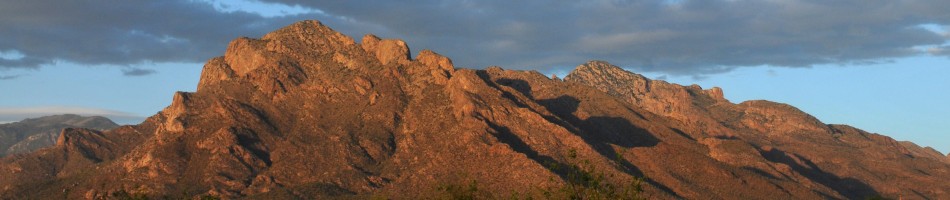
MUL-CHU-THA RODEO and FAIR: IS A FOOT RACE TO A BETTER LIFE ! PEE POSH AND AKIMEL O’ODHAM TRIBES TAG TEAM COMMUNITY PROGRESS WITH GATHERINGS

TIME TO UPDATE FAMILY PHOTOS
Historically the Pee Posh and Akimel O’Odham Tribes have lived together in the Gila River Valley, farming and channeling water from the river to provide food, employment and cooling refreshment in one of the hottest places in the United States. Legend tells us the Gila River Indian Community dates back to the Hohokam who farmed Southern Arizona around 300 B.C. Following in their ancestors footsteps the Akimel O’Odham (Pima tribe) and the Pee Posh (Maricopa) now makeup the 372,000 acre reservation that is divided there into seven districts.
The Mul-Chu-Tha Fair, was born over lunch as tribal employees ate together and shared experiences from their youth. One hot day, they reminisced about the fun they enjoyed swimming in the water canals to cool off. The group decided a swimming pool was needed. The pool complex would give kids a place to have fun and to have activities, the community liked the idea of bringing their youth together and folks want to encourage the Pima family so they held a community fair to raise funds and invited the whole valley to come to the Gila River Indian Community in 1962 and celebrate with their people.


DARRELL HILL DANCES JUNIOR BOYS DANCE GRASS FREESTYLE
In naming the fair and the Tribes wanted a traditional name so “Mul-Chu-Tha,” which means foot races in Pima, was selected. The foot-race historically, Pima runners would hustle from village-to-village or district-to-district and races became a tribal way of sharing entertainment, news and tribal events.

THE “WE CHILDREN” DANCE GROUP IS MADE UP OF DANCERS FROM EACH VILLAGE OF THE 6TH DISTRICT
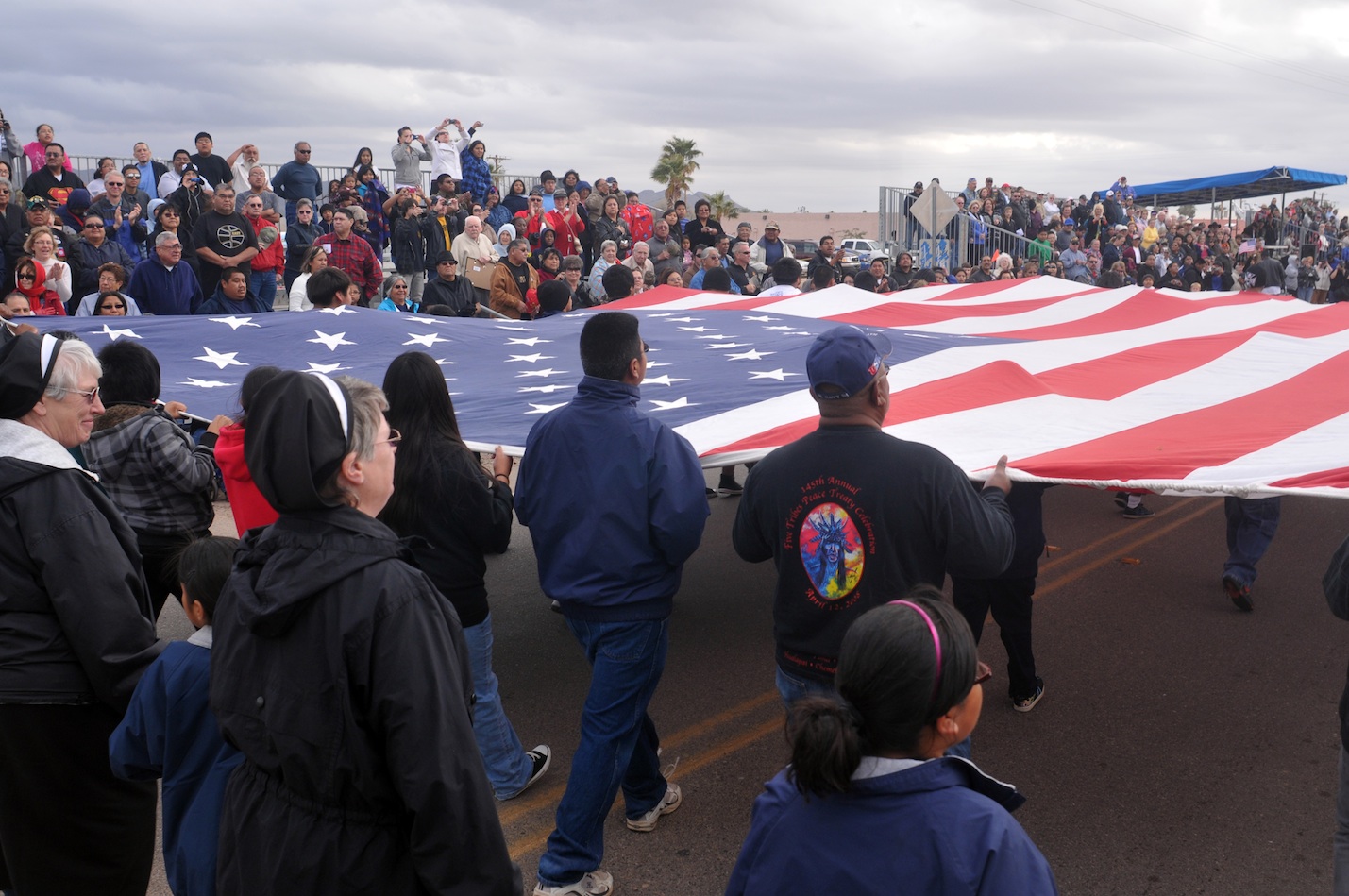
HAYES RAISED A LARGE FLAG FROM A BATTLE SHIP SO EVERYONE ON THE ISLAND COULD SEE

LATE FEBURARY THE ENTIRE COMMUNITY CELEBRATE THE LIFE OF ONE FAVORITE SON, “IRA HAYES”

This unique community has a symbionic relationship between the Akimel O’Odham and Maricopa people, both Piman People, like their cousins the Tohono O’Odham, who live southwest of Tucson and into Mexico. In fact, the southern Piman People are said to live as far south of Mexico’s Rio Yaqui below Guaymas, Sonora. Chicken Scratch or Waila Music is a kind of dance music developed by the Tohono O’Odham people says wickipedia.com who says the genre evolved out of acoustic fiddle bands in the Sonoran desert. The term waila comes from Spanish bailar, meaning to dance. Chicken scratch is a traditional Tohono O’odham dance, which involves kicking the heels high in the air, which supposedly bears a resemblance to a chicken scratching. Chicken scratch, however, is at its root, an interpretation of norteño music, which is itself a Mexican adaptation of polka. Many chicken scratch bands play polka songs with a distinctive flourish, and may also play the waltz. “Chicken scratch” dance is the “walking two step or the walking polka with smooth gliding movements and is always performed counterclockwise”.

CHICKEN SCRATCH DANCERS ARE NOVEL TO SOUTHERN ARIZONA

PERFORMING FOR THE CROWD THIS BAND HAD DANCERS ALL AFTERNOON

CROWD ENJOYING THE WAILA EXPRESS BAND
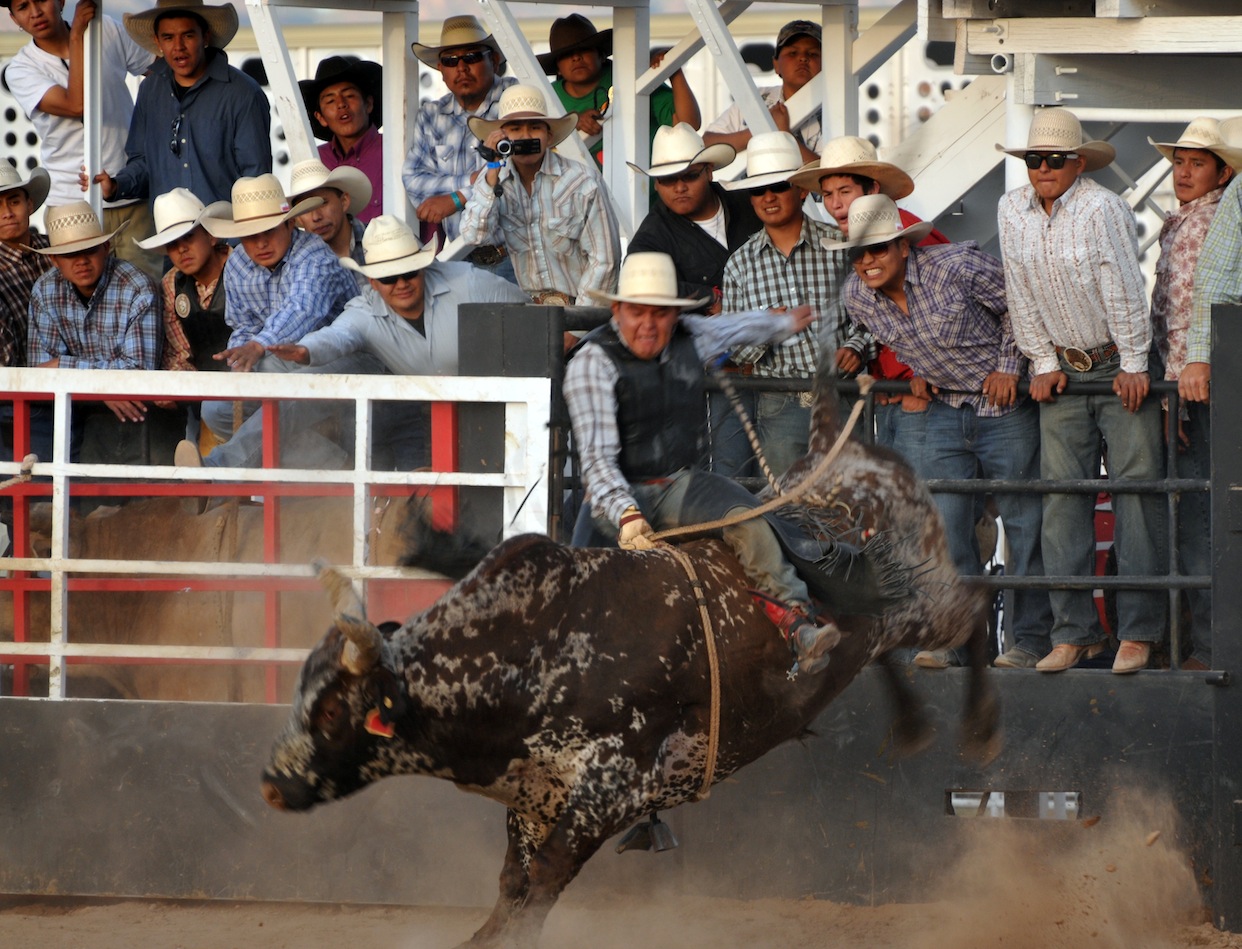
Since building their Swimming Pool, Senior Citizen’s Center and Headstart School for more than fifty one years these two tribal communities have pulled together like family and carved a life for their themselves and friends along the Gila River in Central Arizona. This year the Mul-Chu-Tha was held March 16-18, 2013 and like all years started with a Junior Rodeo on Friday morning featuring hundreds of future cowboys and cowgirls who struggled with the stock to rise to score.

DANCERS FROM THE 5TH DISTRICT

Traditionally, Miss Gila River Community, is crowned and she and her court go out to other Indian communities and represent the Gila River Indian Community throughout the South West. The Miss Gila River Pageant was established and girls were chose by their districts to compete for the title of Miss Gila River.
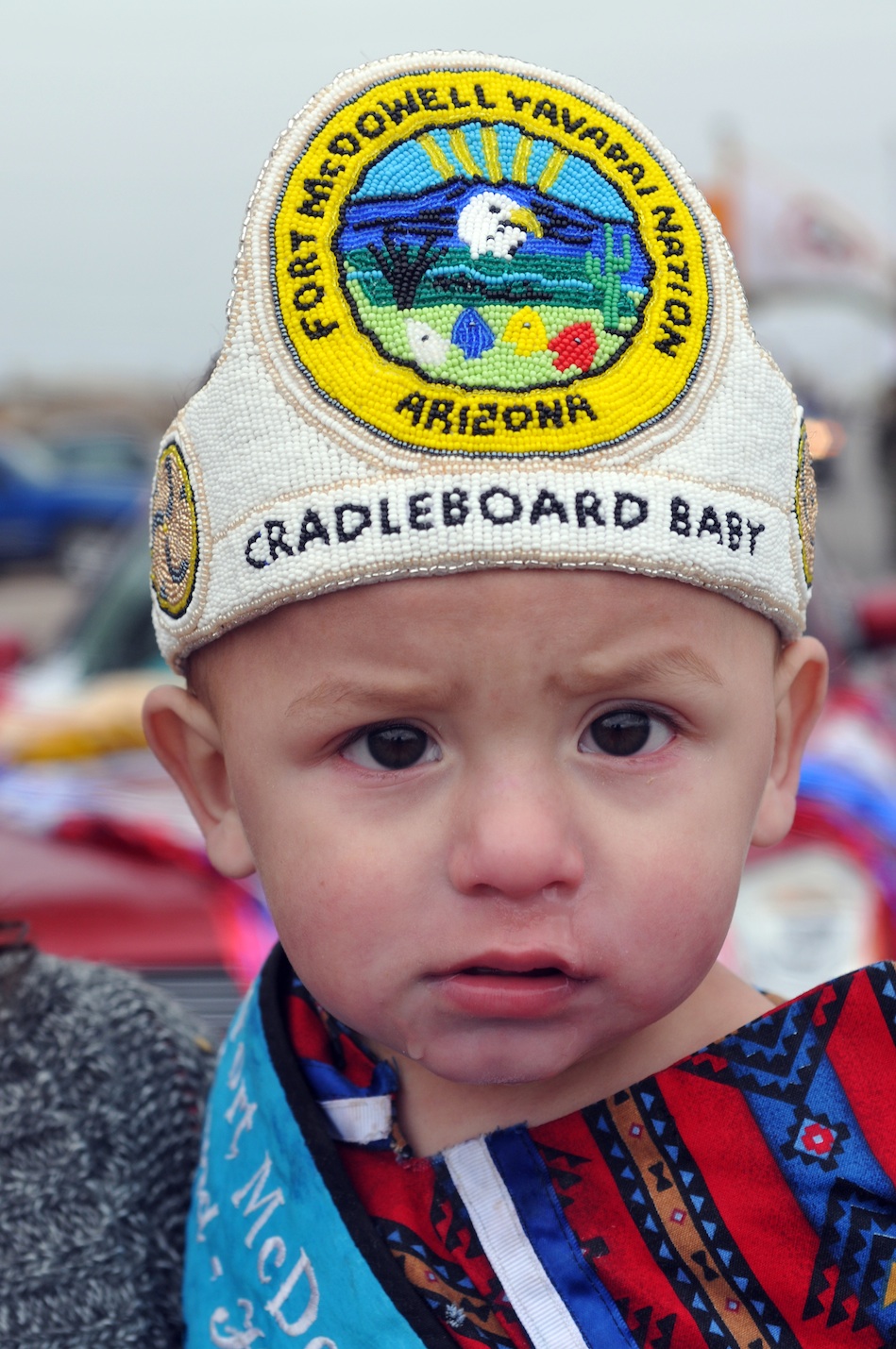
CRADLEBOARD BABY

TRIBAL ROYALITY
Saturday morning started with the parade downtown and featured many prizes for the participants.
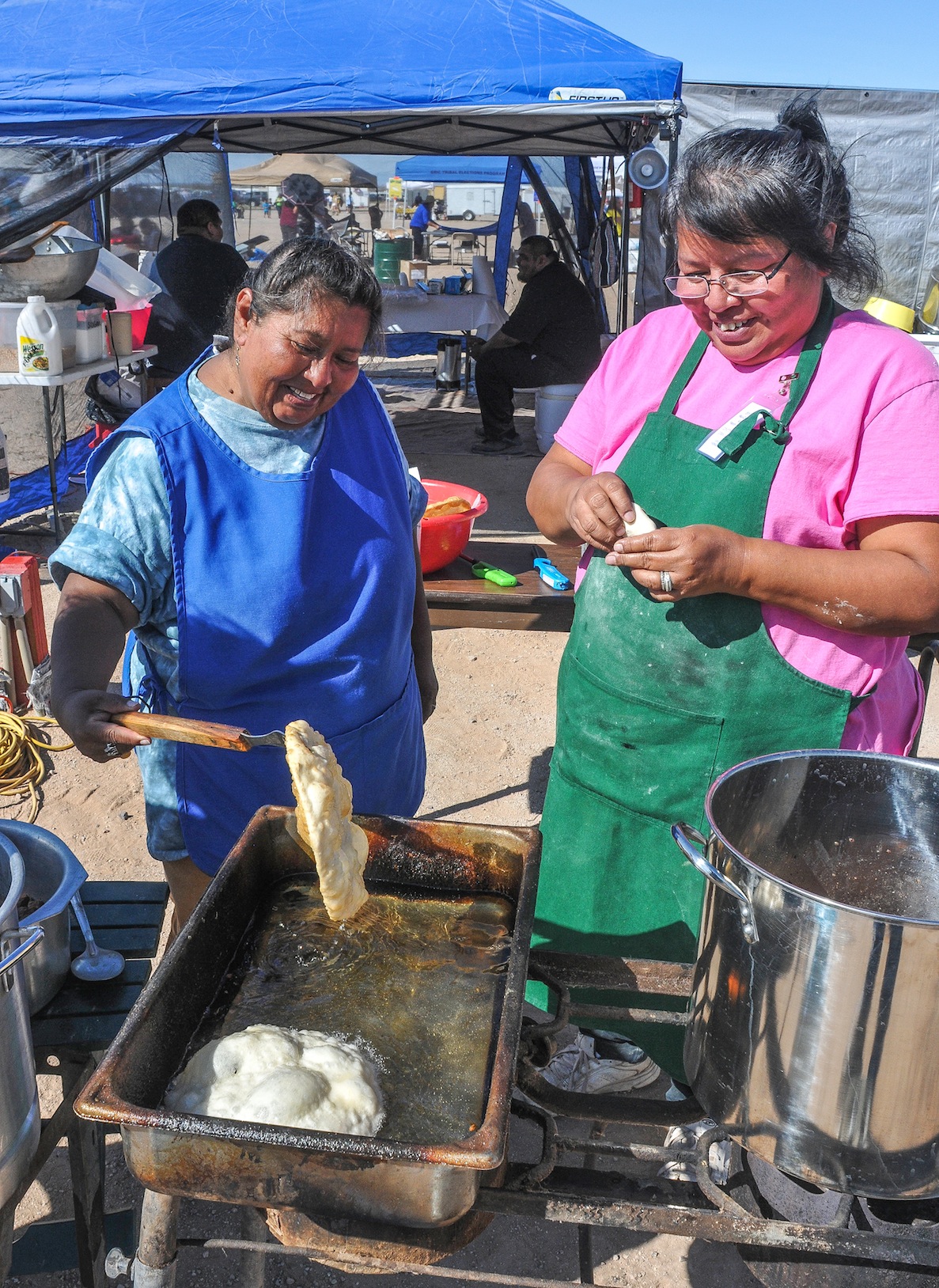
LETICA GARCIA AND SHERRY MARK CONJURE UP SOME FRY BREAD FOR THEIR FOOD BOOTH. SATURDAY MORNING THERE WAS A FRY BREAD COOKOFF.

BIRD SING AND DANCE COMPETITION IS HELD SATURDAY AT NOON
The most interesting part of the first fair was that they held the traditional O’Odham game of “toka,” which today could be considered as similiar to lacrosse. Another big draw in those days, were the matachina dancers. Over the decades, the Mul-Chu-Tha Fair has supported and helped to promote unity within the Community. This fair continues to grow since that simple beginning with few who wanted to find a way to make their Community a better place and provide a little fun for everyone. They succeeded!

Tohono O’Odham women for centuries have played this lacrosse style stick game.
The Fair continues in celebrating their people, their families, their friends, all together in “Honoring Our Ancestors”.
Top Parade Winners featured Salt River Steppers as the best Dance band, the District Five Jujudom won top honors in Chair Volleyball. The Chicken Scratch Battle of the Bands honored the Papago Warriors. Ira Hayes School won the best float for a school club while second place went to Baboquivari High School Road Warriors and third place went to Indian Oasis Elementary Cheer Squad and Gu Achi Cowgirls took fourth.

Andy Jackson (center) hugs his little brother Anthony (right) and Gavin Antone’ this trio were big fans of the midway…
Over the weekend, there was a Men’s Basketball Tournament where the Last Reds took the top bracket followed by the Da Spurs, the Komatke Kings and the Lake Powell Bombers. The Women’s Basketball Tournament honored top honors to Team Arizona, followed by the Hot Shots, Rez Gals and Lady Hoops.
ROBIN LITTLE CLOUD, has her own footrace to run. Little Cloud is the president of COYOTE KETTLE CORN, FOOD and CAKE SALES who along with family, a dozen of her children, grandchildren and five more working from the extended family they create popovers, burritos and cakes featuring their Chocolate, Strawberry, Lemon and Pineapple Upside Down Cakes. With the help of family, Little Cloud has been able to cover all the bases. Letica Garcia is the only outsider helping out with Coyote Kettle, she and Little Cloud’s daughter Sherry Mark met as students at Northern Arizona University. Garcia, is Tohono O’Odham from south of Sells, and helps out for the big events when they need people sweating over hot flames. Like Garcia, the Tohono O’Odham Tribe, also a Piman people and first cousins to the Akimel O’Odham Tribe is usually not far off, and always willing to participate in the Gila River Indian Community events because that’s what family does and the Southern Arizona Tribes for centuries have been partners in carving a better way of life from the Sonoran Desert.
CLICK HERE FOR MORE MULCHUTHA 2013 PHOTOS…..
CLICK HERE FOR earlier MUL+CHU_THA in SouthwestPhotoBank Galleries….
CLICK HERE to see photos from Sells, Az and the Tohono O’odham 75th Rodeo and Fair 2012
CLICK HERE to view photos from 2011 Tohono Rodeo and Fair..


<a href=" SPANISH TRANSLATIONS:
U.S. BRACES FOR WORST BLIZZARD IN RECENT HISTORY, TUCSON GIGGLES ABOUT THE WHITE STUFF….
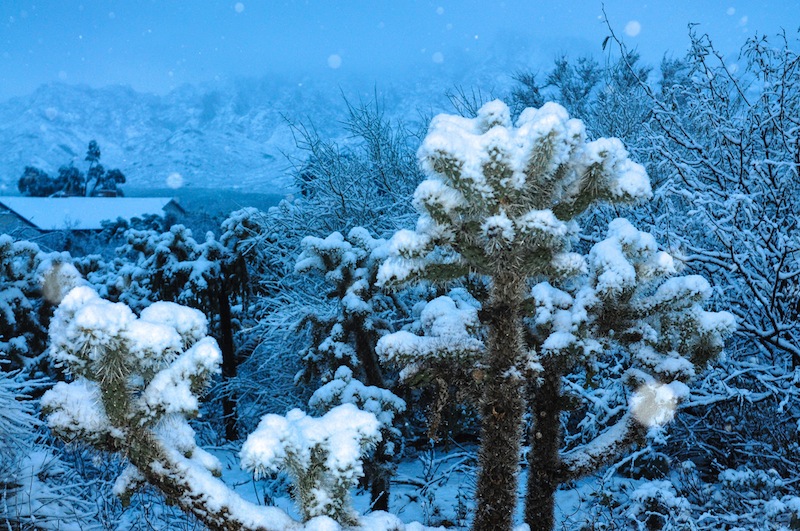
AS NIGHT APPROACHES SNOW CONTINUED TO FALL IN NORTHERN TUCSON.
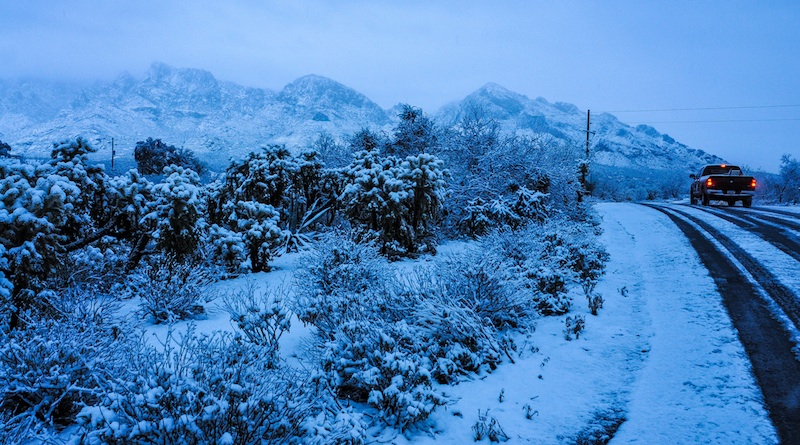
SLUSHY, RE-FREEZING RAIN AND SNOW WILL MAKE DRIVING CONDITIONS DIFFICULT.

THIS IS ONE CONVERTIBLE THAT DOESN’T HAVE ITS TOP DOWN TONIGHT.
TUCSON, ARIZONA was surprised today at Noon with a blizzard–not one of those ice cream drinks, a wanna-beee whiteout or blowing snow all through Tucson mid-town.

Chester, a Sheltie takes a hard look at all the white stuff falling on his patio.
MORE TUCSON SNOW PHOTOS VISIT SOUTHWESTPHOTOBANK.COM….

RANCHO VISTOSO SAFEWAY PARKING LOT
<a href=" SPANISH TRANSLATIONS:
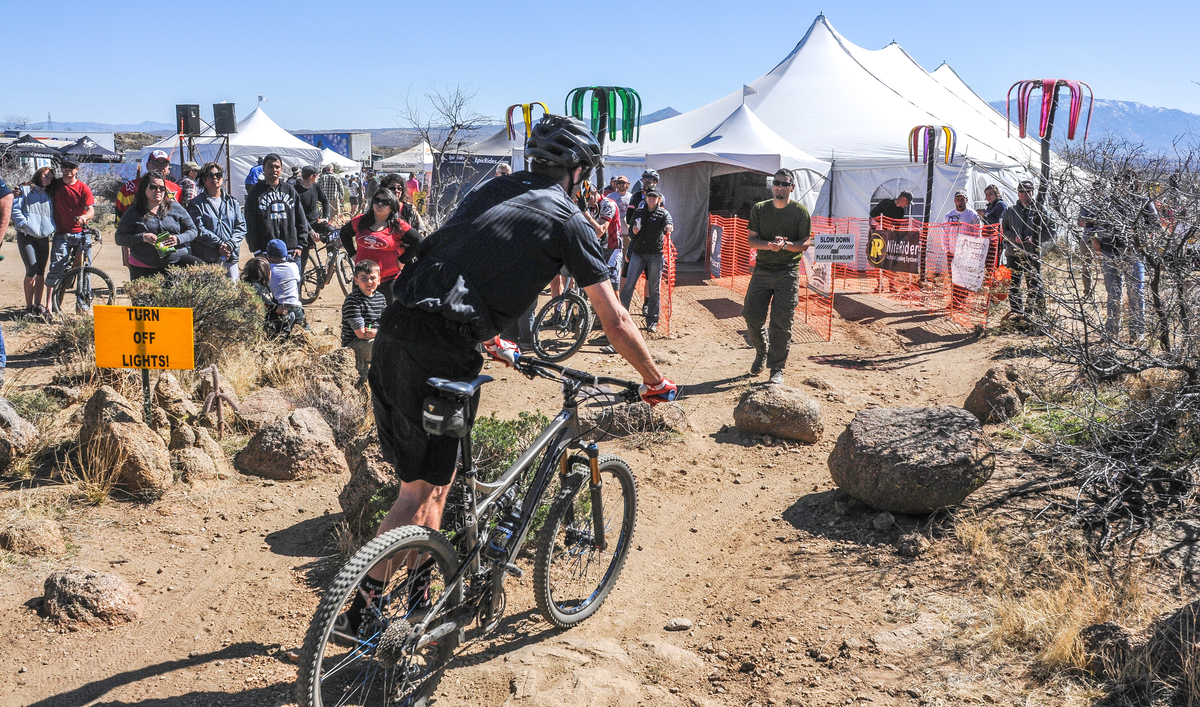
THE EPIC 24 HOURS in the OLD PUEBLO MOUNTAIN BIKE RACE TEST THE METTLE OF THE BIKER AND THE METAL OF THE BIKE, COMPETING RIDERS CUTOFF AT 1875

24 HOURS IN THE OLD PUEBLO MOUNTAIN BIKE RACE FIELDS ALMOST 2000 RIDERS WITH A RUNNING START

PASSING ON THE HIGHPOINT TRAIL TAKES A LOWER GEAR

HELMET CAMS ARE THE RAGE

RIDERS STACK THEIR BIKES CLOSE TO THE START
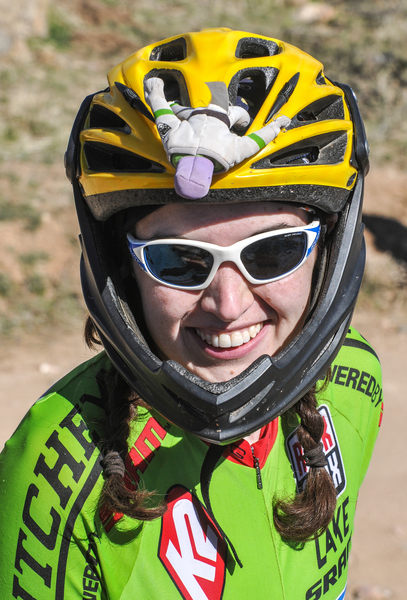
COMPANY FOR THOSE LONELY NIGHTS
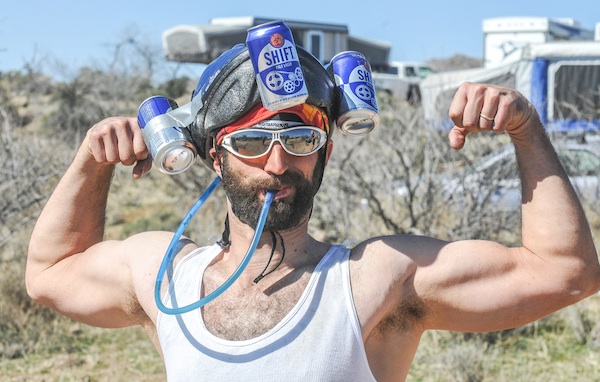

Seat down meal or a quick bite, or a coffee to go…


RUNNING DOWN THEIR BIKES

END OF THE 16.3 MILE TRAIL
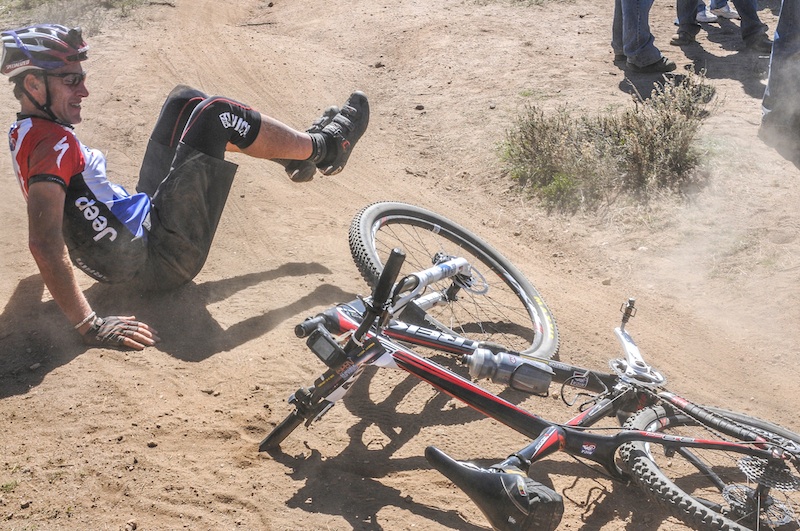
RIDER TAKES A HARD FALL
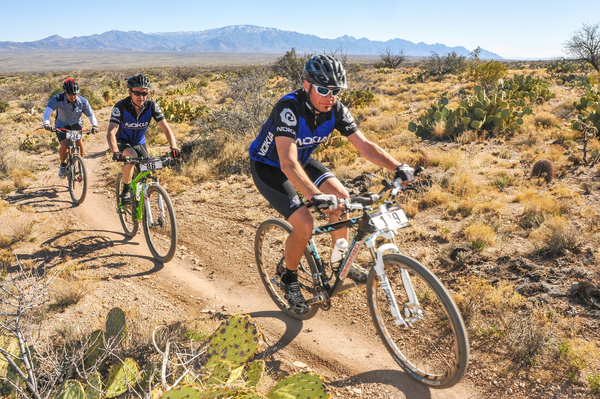
This thin ribbon of cactus free desert stretches 16 plus miles around Willow Springs Ranch.
MORE 24 HOURS in the OLD PUEBLO PHOTOGRAPHS, GO TO SOUTHWEST PHOTOBANK GALLERIES….CLICK HERE
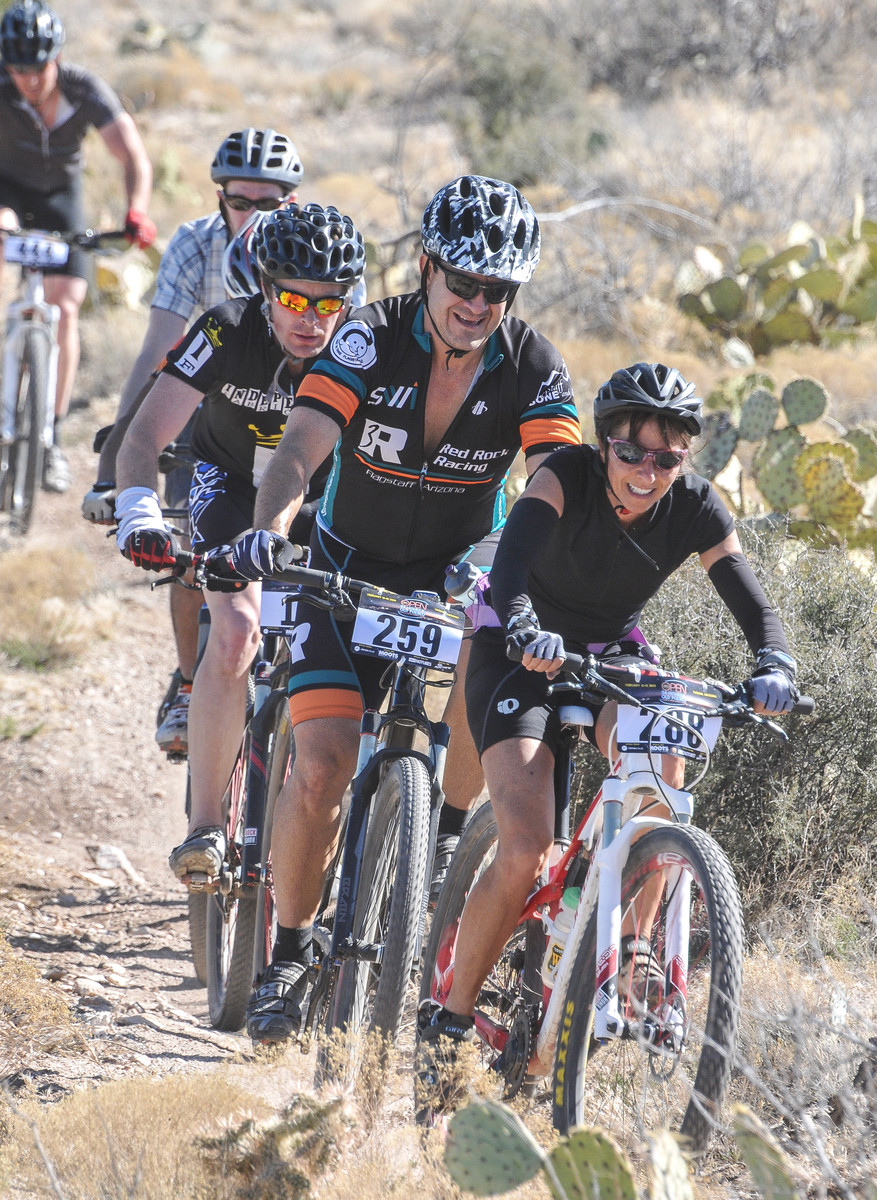
TRAFFIC EBBS AND FLOWS ON THE HIGHPOINT TRAIL THEN IT ALL STACKS UP IN THE CHOLLA
<a href=" SPANISH TRANSLATIONS:
SADDLEBROOK SNOW “PERFECT STORM”, WINTER-WONDERLAND MORNING, GONE BY MID-DAY…


THIS SADDLEBROOKE GARGOYLE SHOWS LITTLE ENTHUSIASM FOR THIS CHANGE IN THE WEATHER-NO REAL FAN OF SNOW…
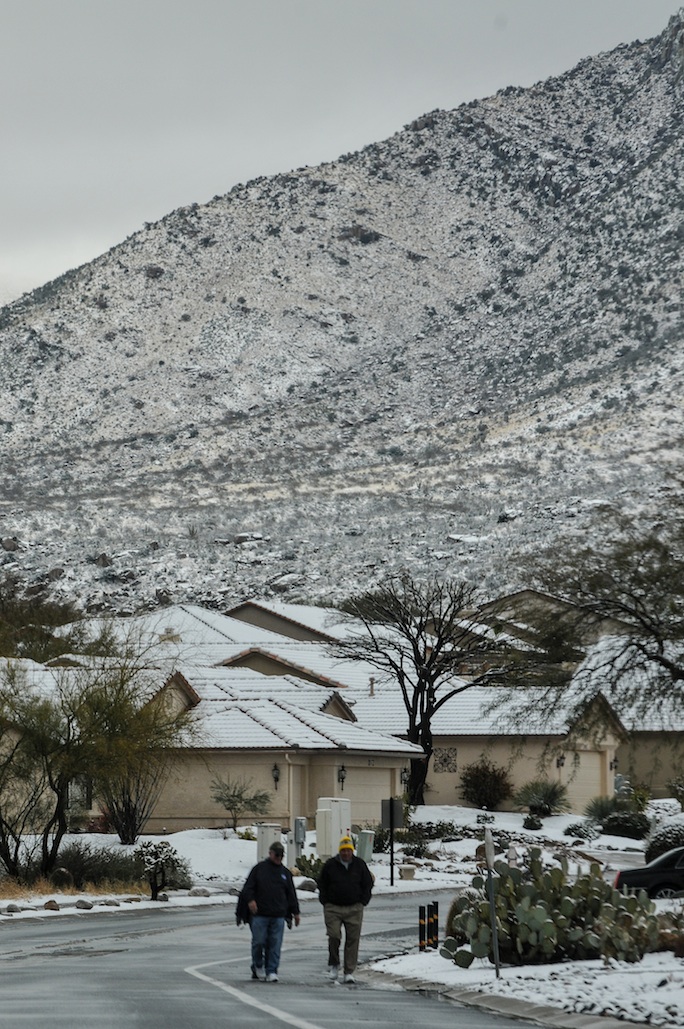
While the Northeast United States is digging out of three feet of new snow and a blizzard of historic proportions — across the great divide on the opposite side of the U.S. Tucsonans awoke to a frosty white deposit on all the mountains surrounding this desert community. The Catalina Range above 9,000 feet took the biggest hit with a fancy white shawl laced down to her foothills. More surprisingly, was the dusting left on the Tortolita’s, the Tucson’s, the Santa Rita’s and the Rincon Mountains all had deep deposits on their higher peaks. Much like the song about Camelot, the rain fell during the night and was gone by daybreak, snow on all peaks is a unique event particularly when the overall temperatures were already in the fifties. Clouds kept sunshine from attacking the snow until around noon when it popped out and the snow began retreating but not before the breaking up clouds allowed the sun to spotlight the peaks setting off their snowy lids against dark backgrounds. Saddlebrooke, Arizona recently was selected as one of the best retirement communities in the United States, particularly due to its setting at the base of the Santa Catalina Range not far from the University of Arizona’s BioSphere, City of Tomorrow. The snow was a big draw and brought lots of walkers out to stride around and check out what snow does when it falls on the desert. It is very textured experience and folks can be very impressed, most remembered winters back east like today which has seized the entire eastern seaboard, shutting down businesses, keeping folks at home, stopping the trains, buses and more than 5,000 air flights. Today the east coast is paralyzed, highways shut down, folks are stranded, some without phone and power lines are down and people are again without heat and lighting–today in Tucson the sun showed itself around noon, warmed up the land and melted away all the snow. There was nothing worse back in the mid-west, three months into a long winter with the black dirty snow stacked against curb and at times in the middle of the streets and knowing you would be climbing over that ugly snow for weeks, except when it would melt quick and refreeze as a invisible glaze–that’s when things really got fun. Southern Arizona was magnificent this morning, the air was so clear you could see forever and by afternoon, it was just beautiful.
SOUTHWESTPHOTOBANK PHOTO GALLERIES: FOR MORE SNOW PICTURES…CLICK HERE
U.S. and CANADA DIG OUT OF HISTORIC SNOWSTORM, 370 THOUSAND WITHOUT POWER, 15 DEAD… CLICK HERE

<a href=" SPANISH TRANSLATIONS:
SELLS 75TH ALL INDIAN RODEO & FAIR, OLDEST IN THE UNITED STATES & BEST ENTERTAINMENT TICKET!


Yree Lepa
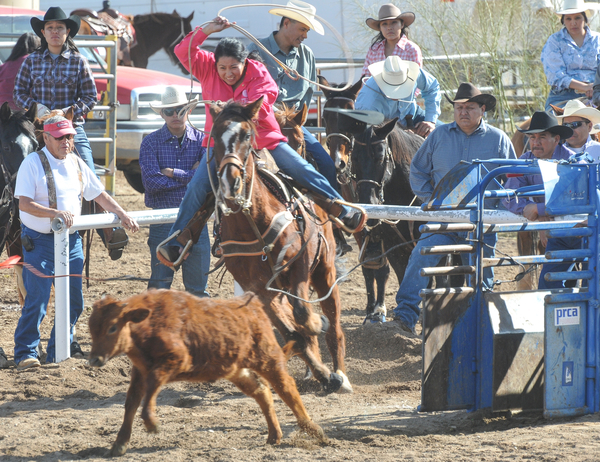
Celebrating the 75th year of the Tohono O’odham Nation Rodeo & Fair, the longest running All-Indian rodeo in the United States! The Rodeo & Fair is the biggest and most expansive event of the year. Bring the family out to enjoy the full experience there is sure to be something for everyone – rodeo competitions, traditional games, food, crafts, carnival rides, fun run, exhibits and performances. The U.S. longest-running American Indian rodeo has a Junior Rodeo which this year fielded 300 young ones, it has a powwow, carnival, parade, Wailia dances, and food/crafts at the Livestock Complex in Sells, 60 miles west of Tucson.  This year’s schedule ran from January 31 through February 3, 2013 at the Eugene P. Tashquinth Sr. Livestock Complex in Sells, Arizona. Named after the long-time voice of Tribal Rodeo’s, the Chu Chui resident (1929-2006) Eugene Tashquinth spent his days bringing order to chaos, heading up most of the events at the livestock area, so when they built the new one, they named it after Eugene Tashquinth. Equally proud is the Tohono O’odham Hedricks family whose matriarch Silas’s name blesses the Rodeo pavilion where he excelled in the arena, his grandson Chad Hedrick put the first score (6.3) on the clock with his bareback ride. Sells is a place of tradition and for the ten thousand residents of the third largest Indian reservation in the United States the annual rodeo and fair is a time of gathering, folks begin gathering before noon and the festivities go way into the night with the Wailia ending around l a.m.. The Rodeo and Pow Wow bring in native American competitors from all over the South West, particularly from Arizona tribes, like the Navajo, Hopi, San Carlos Apache, White Mountain Apache Tribe and their Tohono cousins: the Pima and Maricopa Tribes. Every year, is an old-home-town visit, with folks coming together to visit, catch-up, see who big all the cousins have gotten and to get new pictures of the kids.

 The mid-way is a beacon to all who love carnivals, greasy food, fast rides, regge music from Bob Marley, and tee shirts featuring heavy music idols and black goth signs. Visitors pay $8 for a wristband allowing all day access, for those over 55 years-of-age, the senior charge is $2. The annual Toka Tournament brings together the Tohono O’odham “Dream Teams”, like “Sun-Running-Women” who battle it out on a football sized field fighting over a wooden puck laced with leather and flung up-field with long sticks pulled from the ribs of the saguaro cactus. The start is much like the game lacrosse-another Indian game, it begins almost like a rugby scrum–and then off down field, very little is out of bound. These women celebrate this age old tradition all afternoon long with teams chasing each other up and down the playing field, the ebb and flow, the eventual goal and high-fives all around, losers too. The Pow Wow begins with the traditional Gourd Dance and breaks down into male, female, fancy, Plains categories featuring the finest in Pow Wow and Drum traditions. Just off the mid-way, the crowd not to photograph are the Yaqui Deer dancers nor can you record them with smartphones. The Yaqui Band features a combination of home-made instruments which accompany the dancers, one wears the head of a small deer atop the head, the main dancers each wore a mask to fill out the cast for their dance.

The Santa Rosa Shell Dancers
Earlier the Santa Rosa traditional dancers displayed their dance abilities, wearing their eye-catching shell-leg chaps, made from the shell carried from the Sea of Cortez by their ancestors who later traded the shell to Hohokam in the Salt-Gila River area for their cotton. The Tohono’s Hohokam ancestors valued the shell as a sign of rank, wealth, and much of it was fashioned into jewelry, like bracelets, necklaces, and leggings with shell leg tinklers for dancers The Tohono ancestors had a prehistoric salt trail across the vast waterless Sonoran Desert, across what is today’s US-MEXICO Border and into the blackened landscape of the Sierra de Pinacate lavafields, before crossing the enormous star sand dunes of the Grande Deserto for ten miles before reaching the Gulf of California where they harvested the precious salt and processed the shell, carrying home only what they needed to make jewelry to trade. Traditions have lasted thousands of years in the lands west of Tucson, they exist today and they will thrive tomorrow. The Tohono Tribe are gracious hosts and they welcome young and old, Indian or not as visitors to their Rodeo and Fair. It surprises me how few Tucsonans take advantage and visit the annual Tohono gathering, it surprises me more how few Tucson businesses sponsor, advertise or even acknowledge the tribe and its good work and its people of sterling, ageless character who have been our faithful neighbor for centuries.
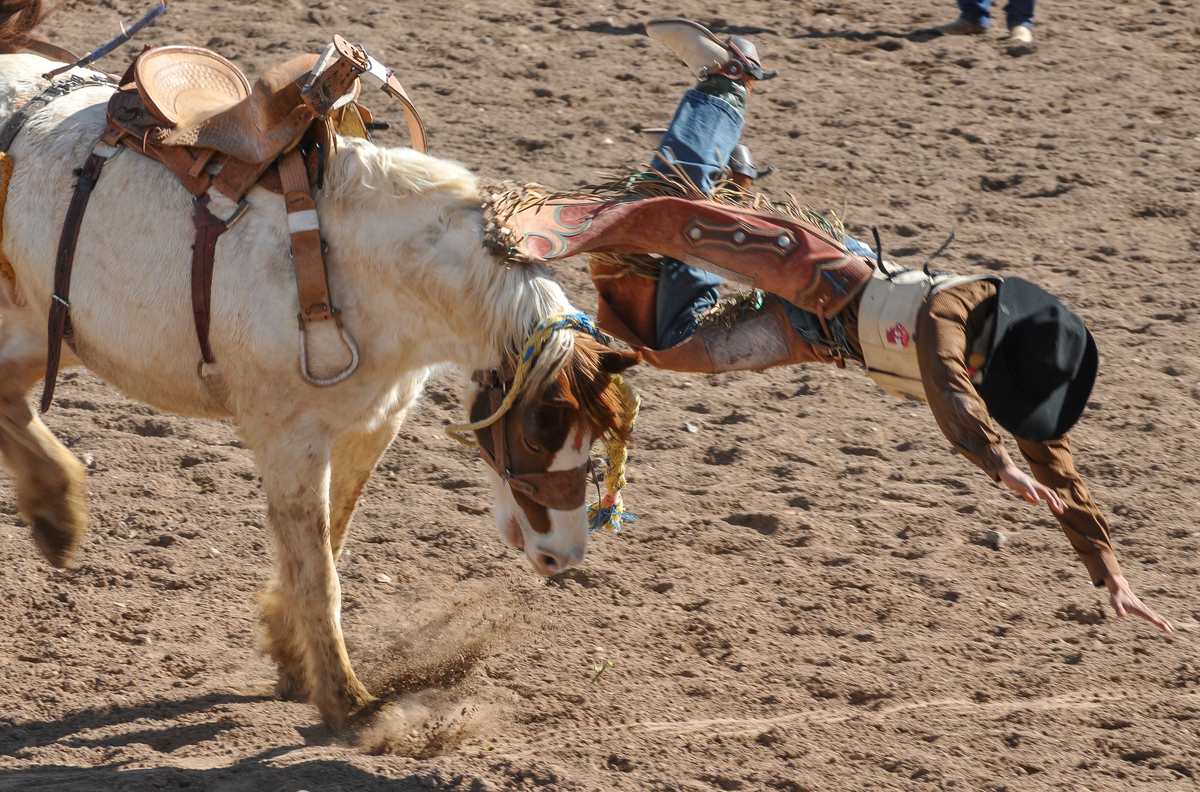

SOUTHWEST PHOTOBANK GALLERY FOR MORE SELLS AZ RODEO PHOTOS CLICK HERE ….
2013 RODEO SCHEDULE…CLICK HERE
<a href=" SPANISH TRANSLATIONS:
ARIZONA STATE of the STATE 2013 SPEECH by GOVERNOR JAN BREWER HIGHLIGHTS THE DIVIDE BETWEEN RICH, POOR, RED, BLUE AND MEXICAN, TASK FORCE TO STUDY BORDER SMUGGLING, SCHOOL FUNDS and AZ-FED LAND
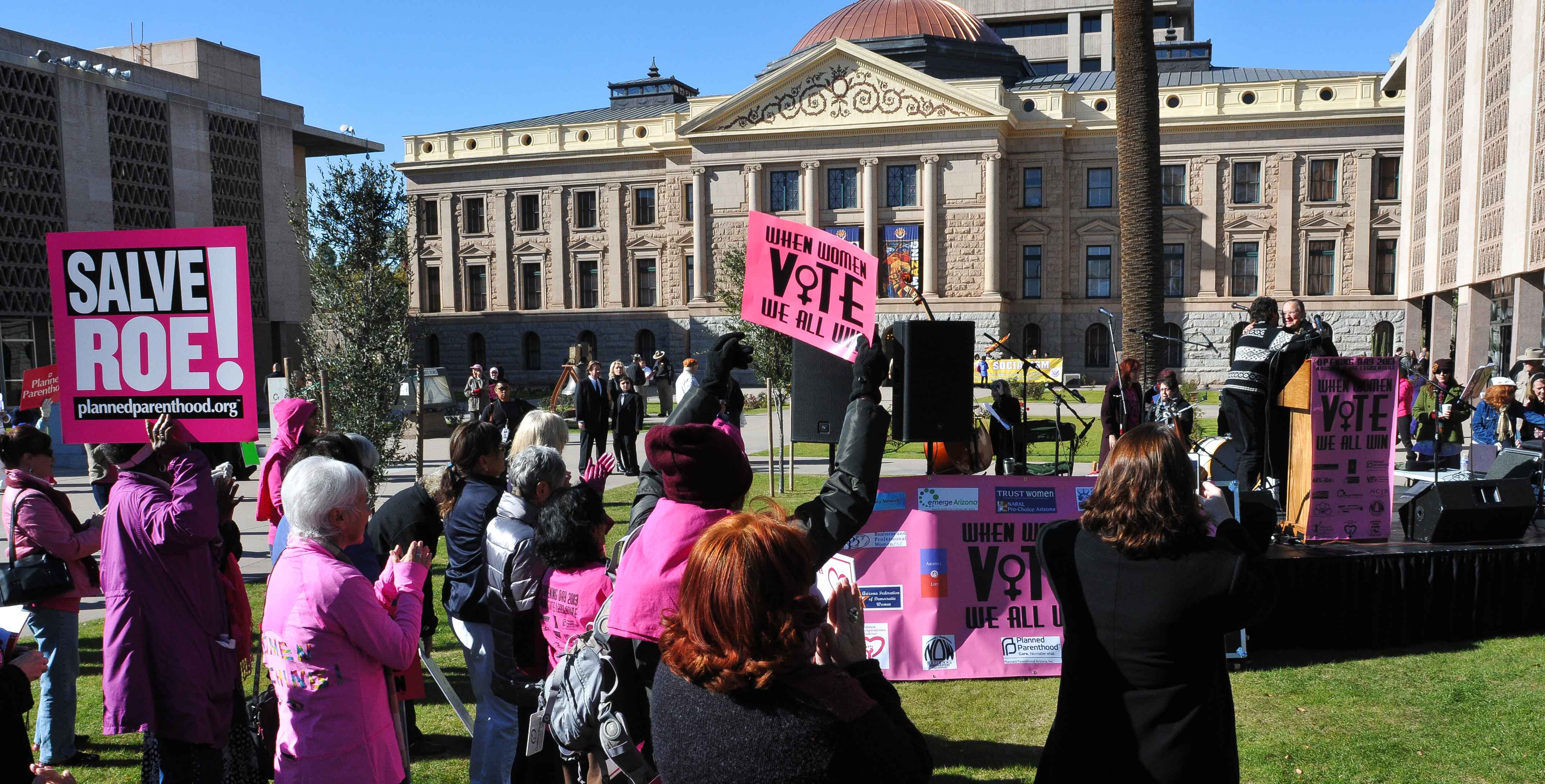

ARIZONA GOV. JAN BREWER ADDRESSES THE ARIZONA HOUSE AND SENATE IN A JOINT SESSION FOR THE ARIZONA STATE OF THE STATE 2013 SPEECH.

ARIZONA GOV.JAN BREWER
Monday’s festivities were scheduled to include the swearing in of 30 Senate members and 60 members of the House of Representatives, keynote speakers and Gov. Jan Brewer’s State of the State speech.
Arizona’s newly retired U.S. Sen. Jon Kyl kicked off opening day of the 51st Arizona Legislature by urging state lawmakers to partner with the federal government on two of his legacy issues, immigration and water rights.
But some minutes into the speech, Kyl, 70, cut short his remarks and left, saying he didn’t feel well.

RETIRING U.S. SEN. JON KYL ADDRESSES THE SESSION
REPUBLICAN JON KYL
REPUBLICAN JON KYL’S CONTRIBUTOR LIST
Kyl said there is a history of mixed success between Arizona and the federal government, but he urged the two levels of government to keep working together.
He defended Senate Bill 1070, even as he acknowledged the immigration-enforcement bill had some flaws.
“I think it was wrong for some elected officials and media to attack Arizona for trying to do something about it,” Kyl said.
Text of Gov. Brewer’s State of the State Address
 ARIZONA GOV. JAN BREWER
The highlights of the address are the governor seeking more CPS workers, more funding for schools, including a pay-for-performance plan, reform the sales tax code, creation of a few task forces including one to manage federal lands in Arizona (which the BLM, Forest Service and National Park Service will have something to say about) and one to combat human trafficking, a pledge to do something about immigration reform after the border is “secure” and the biggee – to expand Medicaid under the Affordable Care Act to 133 percent of the federal poverty line.
All except the human trafficking and the state natural resources task forces will receive considerable resistance from her Republican colleagues who still control the House and Senate.
 <aon
<aon


id="attachment_6332" align="aligncenter" width="950"]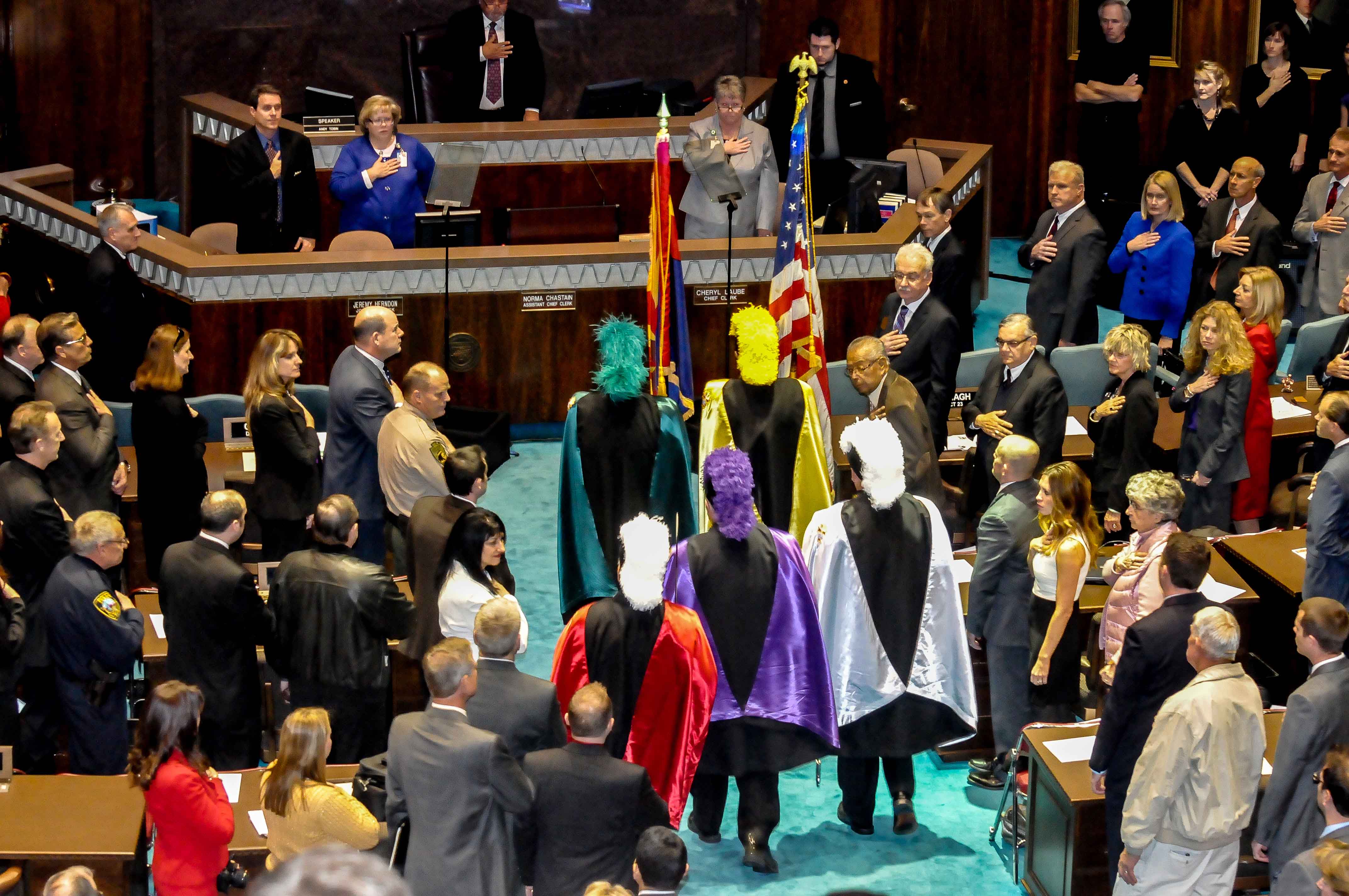 THE SAN XAVIER DEL BAC COLOR GUARD INSTALLED THE FLAG FOR THE OPENING OF THE 51ST AZ LEGISLATURE.[/caption]

FRESHMAN VICTORIA STEELE D9
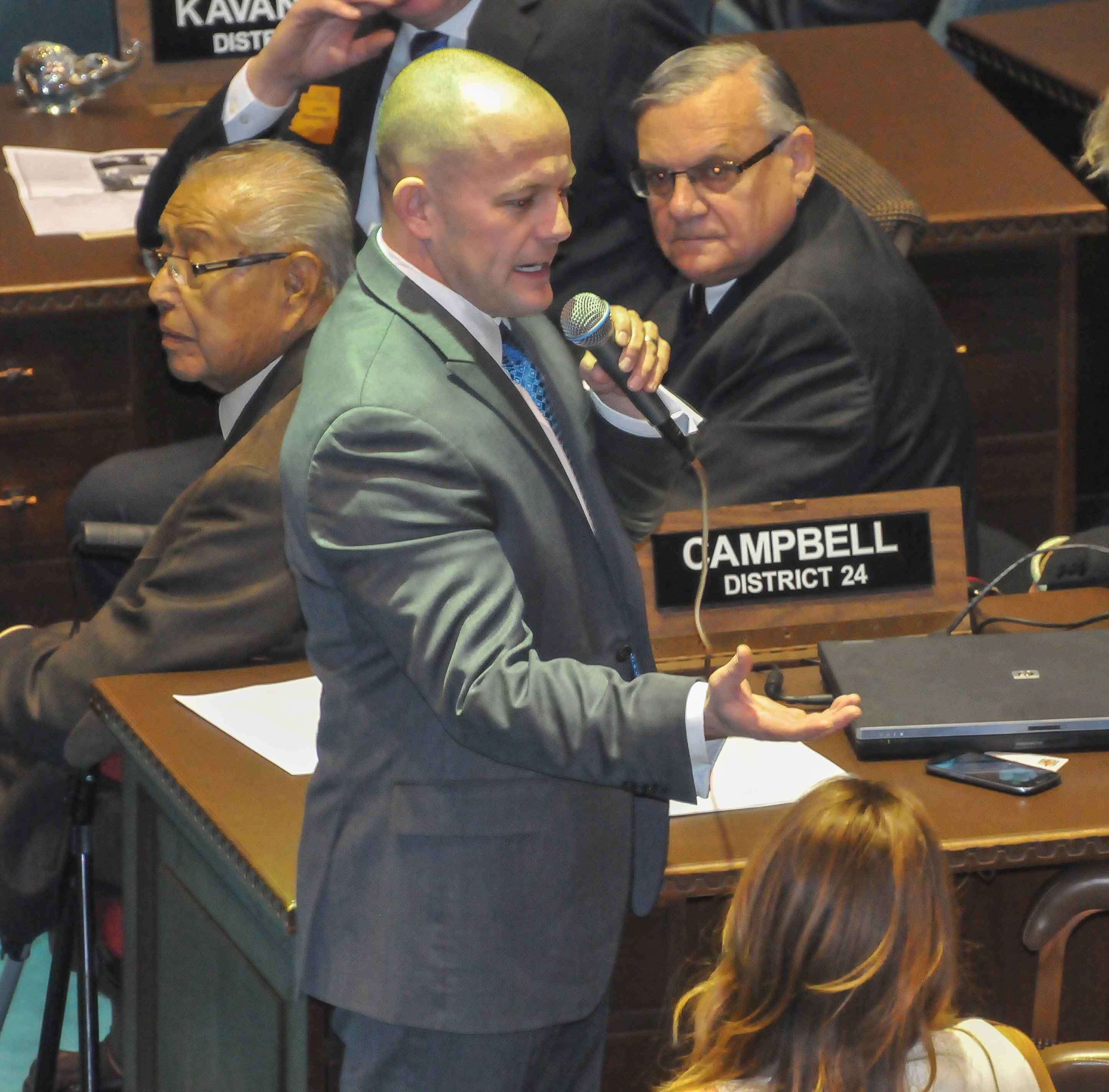
MINORITY SPEAKER CAMPBELL WITH JOE ARPAIO
This is Arizona’s legacy. We were the last of the continental states … carved from rugged country … a territorial landscape equally harsh and beautiful. Arizona’s challenges are great, but not greater than our capacity to meet them…Gov. Jan Brewer 2013
ARIZONA LEGISLATURE WEBPAGE
FOR MORE PHOTOS FROM THE ARIZONA 51ST LEGISLATURE
CLICK HERE TO VISIT SOUTHWESTPHOTOBANK.COM GALLERIES
<a href=" SPANISH TRANSLATIONS:
SECOND ANNIVERSARY of JANUARY EIGHTH SHOOTING LAUNCHES GIFFORDS POLITICAL ACTION PACK TO FUND and BACK LAWMAKERS AGAINST THE RICH GUN LOBBY
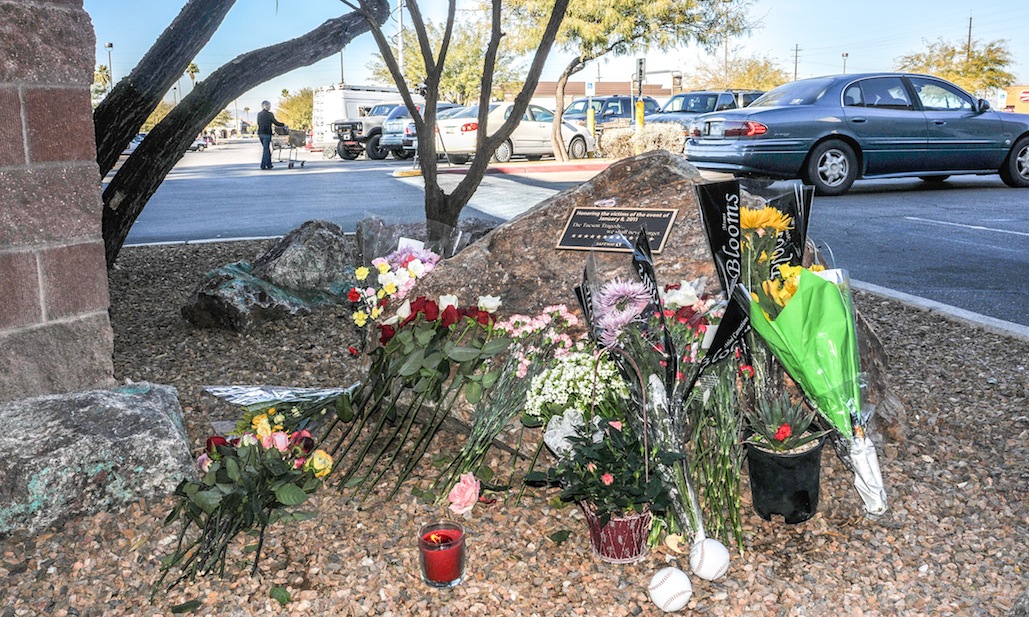
2ND ANNIVERSARY OF JAN 8TH SHOOTING IN TUCSON
 ELEANOR PERCELLO WIPES AWAY TEARS SHED FOR ALL THE SHOOTING VICTIMS (RIGHT) MANY JUST STOPPED TO PAY THEIR RESPECTS, OTHERS HAD BELLS TO RING

<
CLICK HERE FOR SOUTHWESTPHOTOBANK’S GALLERIES FOR MORE SHRINE AND MEMORIAL PHOTOS
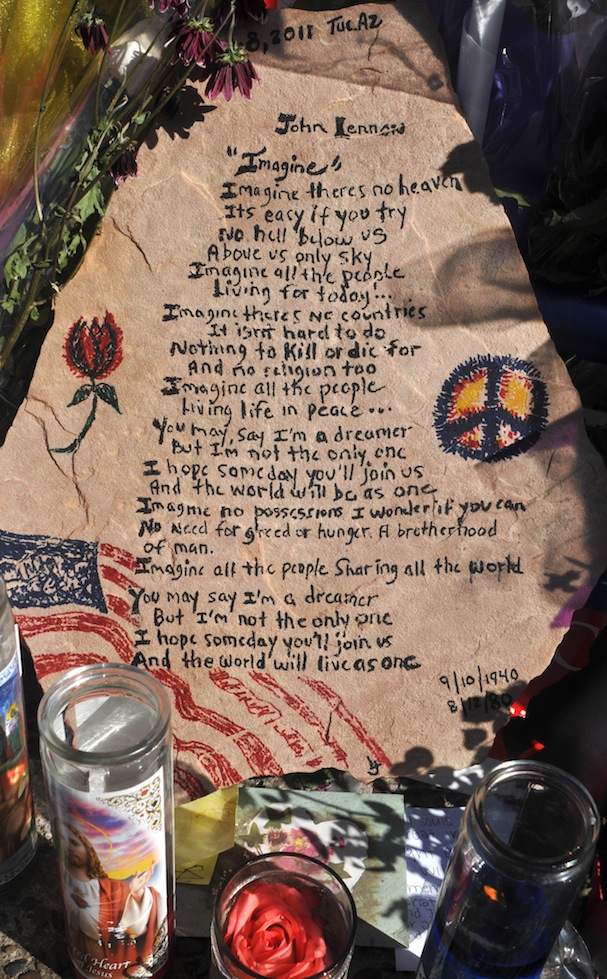
One of thousand items boxed up for the permanent achieve. The words from John Lennon’s song “Imagine”.


Shrines at University Medical Center
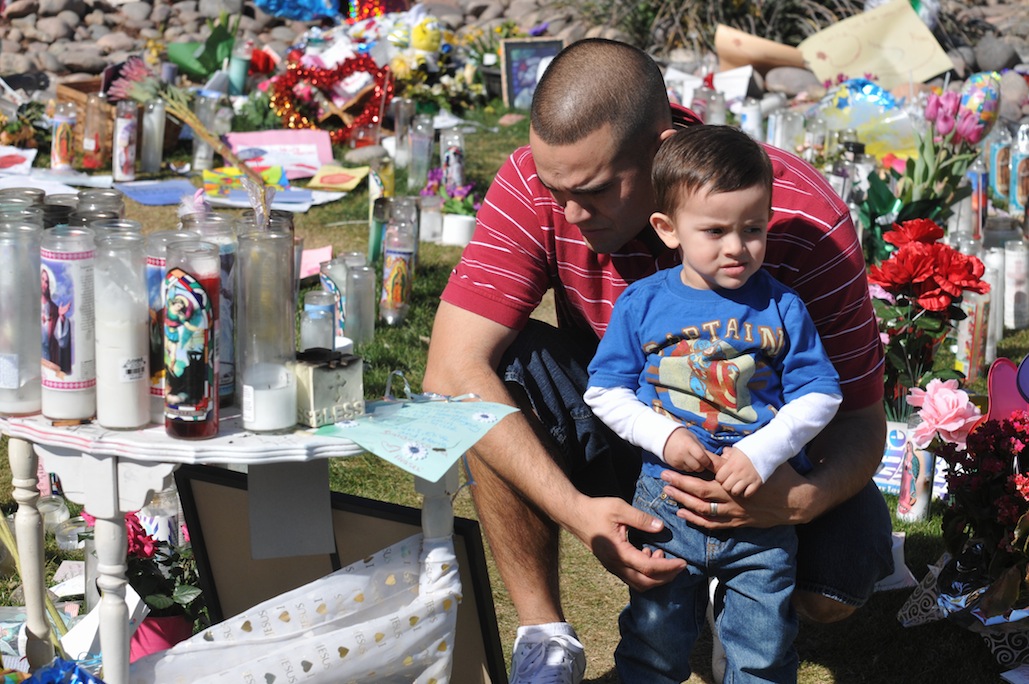

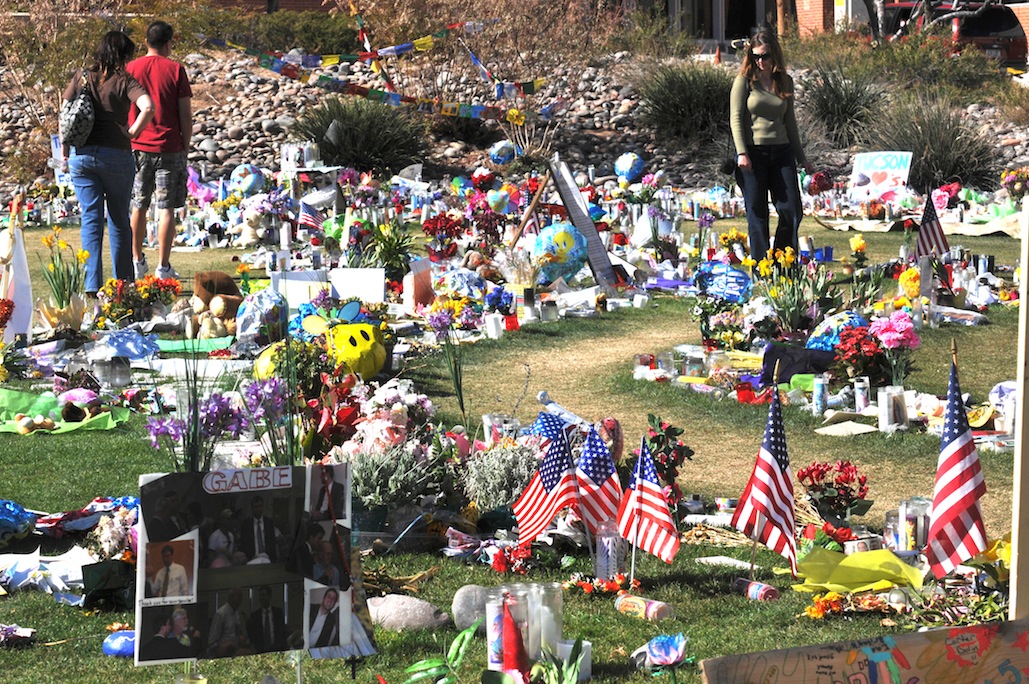
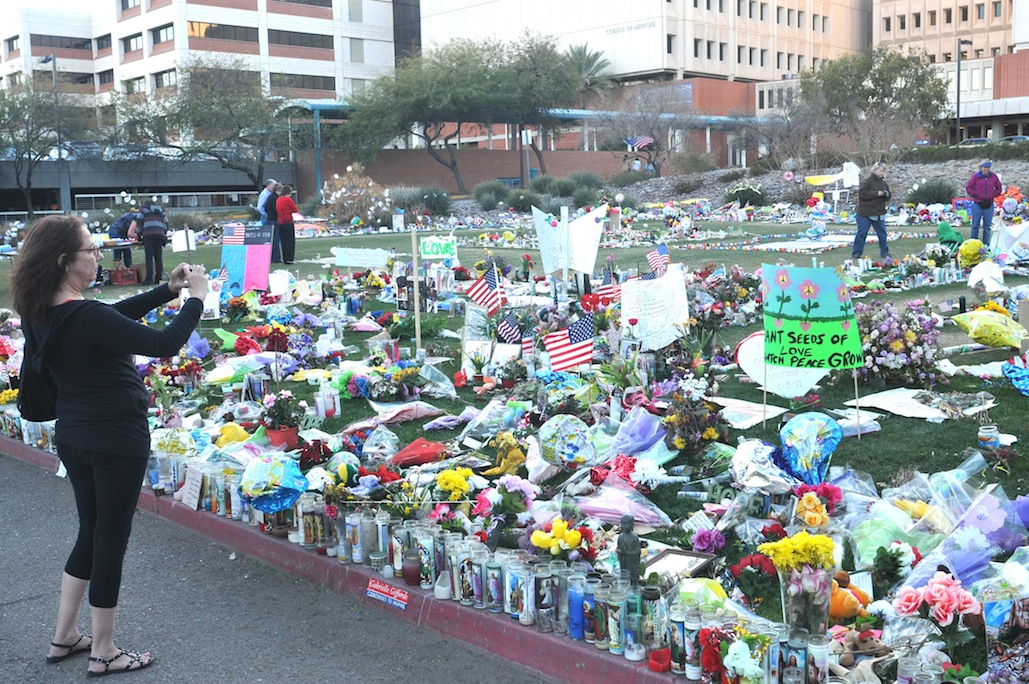
Tears were shed Tuesday as Tucsonans remembered the shooting two years ago that killed six and wounded nineteen. Bells rang throughout Tucson at 10:10am, where ever folks were-they stopped or went outside where churches and schools rang their bells, nineteen times, all in memory of Tucson victims and the hundreds victimized throughout the United States in eleven attacks since the Tucson shooting two years ago. Eleanor Percello, from Marana, wiped tears away Tuesday morning at the Safeway at Ina and Oracle Roads where the shooter killed nine year old Christina Greene, Gabriel Zimmerman 30, and Judge M. Roll, Dorothy Morris, 76; Dorwan Stoddard, 76; and Phyllis Schneck, 79. After the shooting in Tucson thousands visited the shrines and attended the vigils, each has shed a tear, you can’t help but feel touched by all the love, concern and sentiment expressed, “Let a new era of love begin with me” wrote one, “from this day forward I will…” said another. One was inspired to paint John Lennon’s words from “IMAGINE” on flagstone, including “Imagine all the people living Life in Peace”. President Obama came to Tucson and grieved. Since then Congress has done nothing.
FIGHTING GUNS: USA TODAY OP/ED by GABBY GIFFORDS and MARK KELLY
For some the event was life-changing…certainly no lives have changed more than Congresswomen Gabby Giffords who was shot in the Tucson shooting, and her husband, Mark Kelly. Today, Mark and Gabby announced “Americans for Responsible Solutions” an action pack to raise money to combat the gun lobby they say.

GABBY and MARK
In a second anniversary OpEd in USA TODAY, Kelly and Giffords writes Americans for Responsible Solutions, which they launched on January 8th, to invite people from around the country to join a national conversation about gun violence prevention, ARS will raise the funds necessary to balance the influence of the gun lobby, and will line up squarely behind leaders who stand for what’s right. Until now says ARS, the gun lobby’s political contributions, advertising and lobbying have dwarfed spending from anti-gun violence groups. No longer. With Americans for Responsible Solutions engaging millions of people about ways to reduce gun violence and funding political activity nationwide, legislators will no longer have reason to fear the gun lobby. Other efforts such as improving mental health care and opposing illegal guns are essential, but as gun owners and survivors of gun violence, we have a unique message for Americans.
I was shot in the head two years ago today. Since then, my extensive rehabilitation has brought excitement and gratitude to our family. But time and time again, our joy has been diminished by new, all too familiar images of death on television: the breaking news alert, stunned witnesses blinking away tears over unspeakable carnage, another community in mourning. America has seen an astounding 11 mass shootings since a madman used a semiautomatic pistol with an extended ammunition clip to shoot me and kill six others. Gun violence kills more than 30,000 Americans annually.
Dear fellow Americans,
Two years ago today, a mentally ill young man shot me in the head, killed six of my constituents, and wounded 12 others. My recovery has been tough, but I’ve worked very hard, and I feel lucky to be with my family and have this opportunity to do something important for my country.
Since that terrible day, America has seen 11 more mass shootings, but no plan from Congress to reduce gun violence. After the massacre of 20 children and six of their teachers at Sandy Hook Elementary, however, it’s clear: This time must be different. As moderate, gun owners and victims of gun violence, we know there are some common sense things this country can do to reduce gun violence and protect responsible gun ownership. And we’re not alone.

CONGRESSWOMEN GABBY GIFFORDS
We can’t take back the bullet that went through my head or fill the 20 empty beds in a Newtown neighborhood, but we can come together right now to prevent future tragic shootings wrote Gabby Giffords and husband, Mark Kelly.
THE GUN FIGHTERS: GABBY GIFFORDS, VP BIDEN, MAYOR BLOOMBERG ON THE COVER OF TIME MAGAZINE
LAURA ROBERTS BELIEVES ONLY GABBY GIFFORDS CAN WORK A MIRACLE ON OUR GUN LAWS … CLICK HERE
MOTHER JONES GUIDE TO MASS SHOOTINGS IN THE UNITED STATES….CLICK HERE
<a href=" SPANISH TRANSLATIONS:
TUCSON’S NEW YEAR FROSTING, WINTER STORM BRINGS RAIN, SNOW TO SOUTHERN ARIZONA

Catalina State park received close to an inch of rain and flurries of snow.


Grazing in Snow
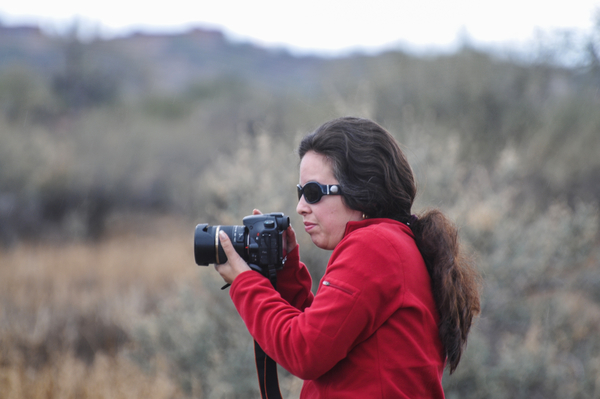
Southern Arizona’s Sky Islands are frosted over for the 2013 New Year and new storms promise to spread snow throughout the border regions of Arizona. Forecasts predicts more, Bisbee has 9 inches, Naco has 7 inches, Sierra Vista has 3 inches and Mount Lemmon’s hwy is now open to four-wheel drive, and is a good place to screw up a nice 4×4, all that traction on ice…?
“It’s beautiful”, says a photographer at Catalina State Park, who has pulled over off the roadway to make a photo. Another lady stopped and rolled down her window, if the ranger sees you stopped on the shoulder, he will ticket you for being off road. Thanks I say as I pull away, that’s total bullshit I think.
VISIT SOUTHWEST PHOTOBANK TUCSON NEW YEAR’S SNOW……….CLICK HERE

CATALINA HIGHWAY THROUGH ORACLE ROAD IN SNOW FLURRIES
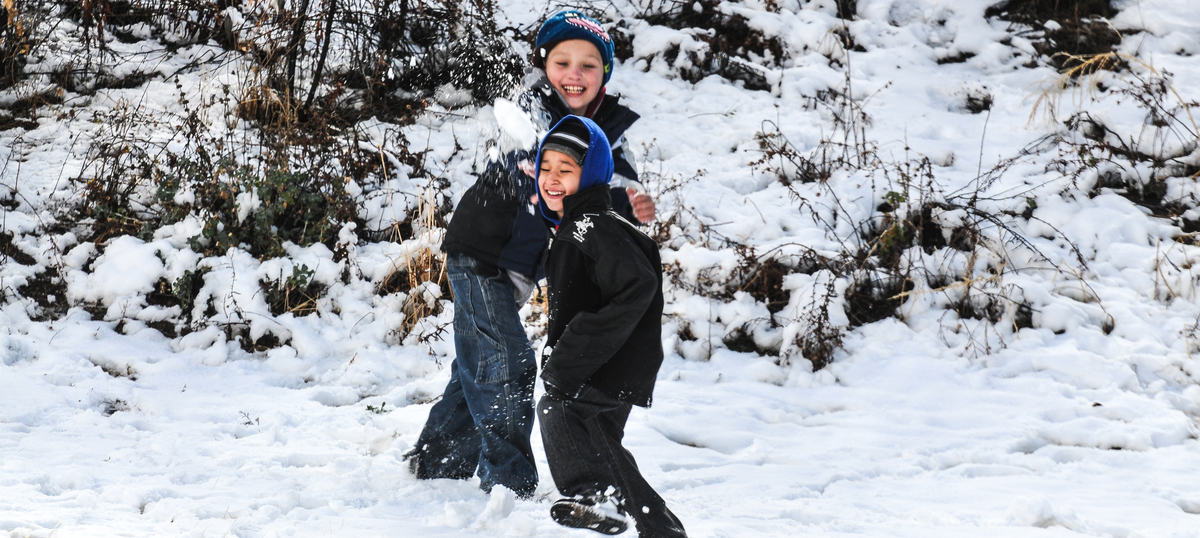
SNOWBALLS ARE MEANT FOR LITTLE BROTHERS

<a href=" SPANISH TRANSLATIONS:
END OF THE WORLD COMING ON SOLSTICE ? WHITE BUFFALO WOMEN SAYS LOVE THE WORLD AND EACH OTHER LOVE WILL RETURN BALANCE TO OUR WORLD !
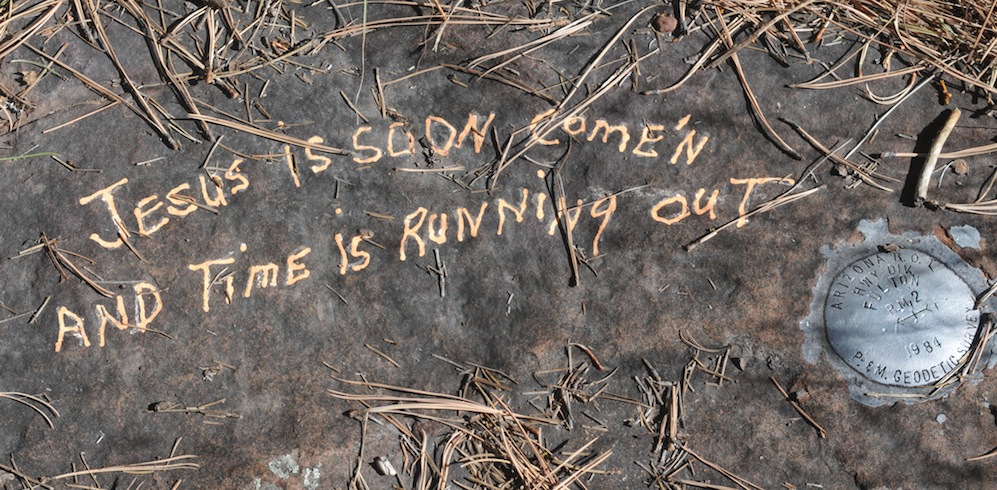
Much has been said about the upcoming end of the World on December 21st! During the election driving through north central Arizona I heard a Christian talk show blame it om Obama, since then Conservative are convinced a black president is truly the end of us all. FEAR…seems to be the message coming from a broad segment of the population, 24 hour cable news keep the most pressing world events center-stage. Right vs Left battles over your health care. Christian folks stabbing people after provoking them in the first place, all in the name of saving newborn. Mass shootings are on a record track and we have just experienced one of the worst in our country’s history, twenty innocent children gunned down. In a sense we find our World tilting out of alignment. In my view it is less a gun control problem than one Ronald Regan began when he mainstreamed the mentally ill, reducing services and forcing a new homeless revolution, mainly by people who can not exist within the framework of society as we know it. This is no small number and because the government and state’s have no funding to provide services for the mentally ill and homeless a terrible stigma has grown up around both the person who lives on the street and those Americans battling their inner demons.

Universal health care is the beginning! In the decades to come it will make a difference. Still we are bedeviled by Global Warming and in some places steps are being taken to battle our changing world. New York and New Jersey is trying to rebuild in a way that protects the regions worst hit by Hurricane Sandy, the Gulf of Mexico has received some expensive first aid from the BP Oil Spill and the gulf is mending slowly and is being watched, studied closely.
Banks, lobbyists have run rampant, like the money changers in the Temples, they have corrupted everything they touched. Mostly law makers and their staffs, their money has bought influence at the expense of the public welfare and still they battle for de-regulation–it is one constant attack on all fronts, whittling down laws and clawing regs in place to protect the health and best interests of all Americans. Collective bargaining is a thing of the past.
WHY THE WORLD WILL NOT END IN DECEMBER 2012
Join us in person at SETI Institute in Mountain View. David Morrison, Ed Krupp and Andrew Fraknoi will discuss the topic of the end of the Mayan Calendar in 2012 and how this has been treated by the media. The negative effect on the public of this millennial memo will also be explored, Speakers: David Morrison, NASA Ames Research Center. Ed Krupp, Griffith Observatory, Southern California. Andrew Fraknoi, Foothill College.

The SETI Institute is a not-for-profit organization whose mission is to “explore, understand and explain the origin, nature and prevalence of life in the universe”. SETI stands for the “search for extraterrestrial intelligence”. One program is the use of both radio and optical telescopes to search for deliberate signals from extraterrestrial intelligence. Other research, pursued within the Carl Sagan Center for the Study of Life in the Universe, includes the discovery of extrasolar planets, potentials for life on Mars and other bodies within the Solar System, and the habitability of the galaxy. Photo taken near Socorro, New Mexico.

So why in this time of all these horrible pressures on our way of life do we possibly believe America and the rest of the World, Europe, Africa, the Middle East can pull out of this deadly spiral, pull up and level off. For beginners, the Mayan calendar says so it goes on and besides what is reported, it continues. Secondly, there is now a level of optimism across our country that conveys a hopefulness, in spite of all the Republicans, acting as if the world in going to end. Mitts dog will get more road trips, besides, the price of gas has been dropping ever since they started investigating why it was so high. It wouldn’t be fair if the world can to an end now. NORAD, the folks that track space junk, satellites, incoming asteroids, comets, Death stars, like in Independence Day they already had a picture. NORAD says there is nothing on the horizon that would bring an end our world! So with the world tilting off its axis and when many believe it is spinning out of control and when some believe it is all over. I’m here to say — wait a minute. Yes, this World has lost some of its beauty, it is an ugly world and many people I know say the future will not be nearly as prosperous and promising for their children, as their generation enjoyed. Maybe or maybe not, my view that has always depended upon the individual and what they were willing to work for.
So besides all the hopeful reasons I have already conveyed to you, I have two words more for you White Buffaloes!

WHITE BUFFALO

ARIZONA’S BEARIZONA HAS WHITE BUFFALO
News of the calf spread quickly through the Native American community because its birth fulfilled a 2,000 year old prophecy of northern Plains Indians. Joseph Chasing Horse, traditional leader of the Lakota nation, explains that 2,000 years ago a young woman who first appeared in the shape of a white buffalo gave the Lakota’s ancestors a sacred pipe and sacred ceremonies and made them guardians of the Black Hills. Before leaving, WHITE BUFFALO WOMEN prophesied that one day she would return to purify the world, bringing back spiritual balance and harmony; the birth of a white buffalo calf would be a sign that her return was at hand.
“The White Buffalo is a blessing from the Great Spirit. “It’s a sign”. These white buffaloes are showing us that everything is going to be okay.”
The White Buffalo Woman showed the people the right way to pray, the right words and the right gestures. She taught them how to sing the pipe-filling song and how to lift the pipe up to the sky, toward Grandfather, and down toward Grandmother Earth, to Uncie, and then to the four directions of the universe. “With this holy pipe,” she said, “you will walk like a living prayer. With your feet resting upon the earth and the pipestem reaching into the sky, your body forms a living bridge between the Sacred Beneath and the Sacred Above. Wakan Tanka smiles upon us, because now we are as one: earth, sky, all living things, the two-legged, the four-legged, the winged ones, the trees, the grasses. Together with the people, they are all related, one family. The pipe holds them all together.”
“Look at this bowl,” said the White Buffalo Woman. “Its stone represents the buffalo, but also the flesh and blood of the red man. The buffalo represents the universe and the four directions, because he stands on four legs, for the four ages of man. The buffalo was put in the west by Wakan Tanka at the making of the world, to hold back the waters. Every year he loses one hair, and in every one of the four ages he loses a leg. The Sacred Hoop will end when all the hair and legs of the great buffalo are gone, and the water comes back to cover the Earth.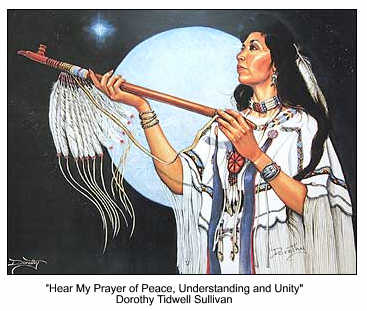
The wooden stem of this chanunpa stands for all that grows on the earth. Twelve feathers hanging from where the stem the backbone joins the bowl the skull are from Wanblee Galeshka, the spotted eagle, the very sacred who is the Great Spirit’s messenger and the wisest of all cry out to Tunkashila . Look at the bowl: engraved in it are seven circles of various sizes. They stand for the seven ceremonies you will practice with this pipe, and for the Ocheti Shakowin , the seven sacred campfires of our Lakota nation.”
The White Buffalo Woman then spoke to the women, telling them that it was the work of their hands and the fruit of their bodies which kept the people alive. “You are from the mother earth,” she told them. “What you are doing is as great as what warriors do.” And therefore the sacred pipe is also something that binds men and women together in a circle of love. It is the one holy object in the making of which both men and women have a hand. The men carve the bowl and make the stem; the women decorate it with bands of colored porcupine quills. When a man takes a wife, they both hold the pipe at the same time and red cloth is wound around their hands, thus tying them together for life.
And when she promised to return again, she made some prophesies at that time ….One of those prophesies was that the birth of a white buffalo calf would be a sign that it would be near the time when she would return again to purify the world. What she meant by that was that she would bring back harmony again and balance, spiritually.
The woman gave the people a sacred pipe, taught them how to use it to pray and told the Sioux about the value of the buffalo. Before she left them, the woman said she would return, the legend says.
As she walked away she turned into a young white buffalo.
The return of White Buffalo Calf Woman marks the arrival of a new era of reconciliation among races and respect for the Earth. (excerpts borrowed from an article in the Chicago Tribune by Richard Wronski)
SEE BIRTH OF WHITE BUFFALO http://www.youtube.com/watch?v=LteJdKp54yg
BIRTH OF WHITE BUFFALO FULFILLS TRIBAL PROPHESY…CLICK HERE

WHITE BUFFALO WOMEN
SACRED NINE COMMANDMENTS FROM THE CREATOR TO NATIVE PEOPLE AT THE TIME OF CREATION
1. Take care of Mother Earth and the other colors of man.
2. Respect this Mother Earth and creation.
3. Honor all life, and support that honor.
4. Be grateful from the heart for all life. It is through life that there is survival. Thank the Creator at all times for all life.
5. Love, and express that love.
6. Be humble. Humility is the gift of wisdom and understanding.
7. Be kind with one’s self and with others.
8. Share feelings and personal concerns and commitments.
9. Be honest with one’s self and with others. Be responsible for these sacred instructions and share them with other nations.
NATIONAL INSTITUTE FOR CIVIL DISCOURSE…CLICK HERE

SAINT KATERI TEKAKWITHA
WORDS TO LIVE BY …. IT’S A NEW YEAR ! WHY NOT A NEW WORLD !
WHITE BUFFALO WOMEN HAS SHOWN THE WORLD HOW TO LOAD THE PIPE THAT BRINGS HARMONY TO THE WORLD. AFTER WASHINGTON AND COLORADO PASSED NEW MARIJUANA LAWS RELAXING THE STIGMA OF POSSESSION AND SMOKING THE WEED THERE IS LITTLE DOUBT IN MY MIND WHAT THEY WILL BURNING IN THAT PIPE.
This summer the Vatican ordained its first Native American Saint, Saint Kateri Tekakwitha, was canonized on 10/21/2012 by Pope Benedict XVI, two months to the day before the World Ends. In his remarks the Pope said he hoped the love of Saint Tekakwitha would bring together all Native Americans and all people. He “hoped she would be the great unifier”
SEE PHOTO GALLERY ON CELEBRATION OF SAINT KATERI TEKAKWITHA AT SAN XAVIER CLICK HERE….
SEE THIS END OF THE WORLD BLOG ON PROTECTING YOUR FAMILY FROM ZOMBIES….CLICK HERE
<a href=" SPANISH TRANSLATIONS:
SPANISH ENTRADA SEARCHES FOR CITY OF GOLD, CORONADO FINDS AMERICAN SOUTH WEST, SEES LITTLE TO VALUE EVEN LESS TO CARRY OFF!


THE SPANISH ENTRADA AND CORONADO VISITED MANY OF THE RIO GRANDE PUEBLOS. THE TAOS PUEBLO (above) WAS VISITED BY OUT-RIDERS AFTER DEFEATING CIBOLA OR TODAY’S ZUNI PUEBLO IN NEW MEXICO.
Crossing into the US from Mexico at this spot in the San Rafael Valley, the Franciscan friar FRAY MARCUS de NIZA with his Moorish guide, Estevan, entered from Mexico at this spot in Arizona’s San Rafael Valley, where this concrete cross stands as a memorial of decades of Spanish rule in North America which was followed by a “tidal wave of white men”. De Niza’s journey ended South West prehistory and marked the beginning of written history.
Beside this dusty dirt road only a short distance north from Lochiel, Az, stands the 20 foot cross with a metal plaque that proclaims “On this spot FRAY MARCUS de NIZA entered this Valley of San Rafael, as Commissary of the Franciscan Order and a Delegate of the Viceroy of Mexico, de Niza entered Arizona the first European west of the Rockies on April 12, 1539. Here began the friar’s historic journey to explore the American Southwest, his journey ignited a decade of searching by conquistadors for the gold and riches they hoped to exist in the legendary “Seven Cities of Cibola”.[caption id="attachment_5114" align="aligncenter" width="950"] Marks de Niza Entry
Ironically, at the time of the march to Cibola (Zuni N.M.) and Quivira (Kansas) in 1541, Hernando de Soto’s army was probing west from Florida. In May of 1541, at the same time Coronado was in Texas and starting north to Kansas, de Soto was crossing to the west bank of the Mississippi River. The armies may have passed within some hundreds of miles of each other. While Coronado was in Kansas and marching back to the Albuquerque area, De Soto was probing west of the Mississippi, where he died on the Red River in April of 1542. If the two armies had met up, they might have considered their expeditions more successful.

CONQUISTADORS CLIMBED INTO THE SKY CITY OF ACOMA, THEY WISHED THEY HADN’T.
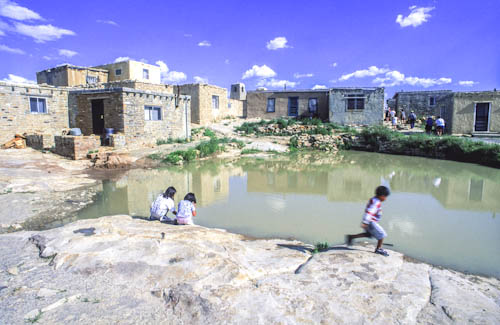
NATURAL WATER CATCHMENTS ARRESTED RUNOFF ON THE MESA FLOOR
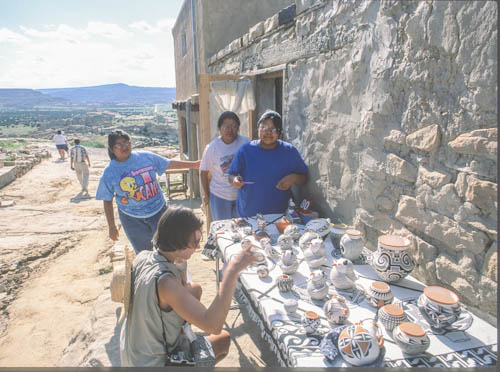
A POTTERY TRADITION EXISTS IN MOST PUEBLOS.

NORTH CENTRAL NEW MEXICO
De Niza’s visit to Arizona’s opened the door for Spanish exploration that defined the size, the people and the nature of today’s American West. FRAY MARCUS de NIZA, found himself about 15 miles east of what is today’s Nogales, Arizona and Sonora as their horses picked their trail through the rich Arizona grasslands. De Niza was guided by Estevan, an Moor slave who had survived the same decade of slavery and walking through Texas to Mexico after being ship-wrecked off the Florida coast with the Spanish mariner named Álvar Núñez Cabeza de Vaca who reported to the Viceroy of Mexico the riches of Cibola. The Viceroy sent the Friar de Niza and Estevan to learn the truth about “Cibola”, was it made from gold or wasn’t it? Estevan knew from his travels the Indian of the time perceived “Cibola” as the “greatest thing in the world”, so-the servant said. Survival had taught him how to excite the average Indian village, the large charismatic black man who wore tinkers and led a large entourage of slaves and women whom he had collected. Estevan had learned it was better to be the point of the spear ahead of the main expedition finding water and probing their path for guides and information, rather than playing the role of a slave. Estevan was charged to send back runners with crosses, if news was promising about riches ahead send a big cross, he had been told, if chances were poor, then send a small cross. Estevan decided to promote his own agenda sending back crosses that got progressively larger. Estevan was the original Kokopelli, he captivated the locals, wowed the maidens, had a few and moved on to the next village before the larger expedition arrived.

FIREARMS, HORSES AND CROSSBOWS TOOK A TOLL ON THE INDIAN
De Niza, upon his first return to Mexico City from Cibola, he had reported finding “good and prosperous lands” others soon twisted that translation into a new land of riches, equal to the wealth of gold, silver and gemstones, taken from the Aztec and Inca civilizations of Mexico and South America. Cibola was soon thought to be where “trees hung with golden bells and people whose pots and pans were beaten gold”, so with that promise of riches, finding soldiers and patrons to fund the journey became easy, everyone wanted a piece of the action. De Niza’s companion Estevan de Dorantes was killed at Cíbola, as de Niza watched from afar, but from that range the friar affirmed that the “grand city” report was true. The Friar’s report had inspired Francisco Vázquez de Coronado to make his famous expedition to Zuni Pueblo, using Fray Marcos as his guide; their journey had many hardships: thirst and hunger, many died and most were left penny-less. So it’s an understatement the expedition had a great disappointment, when they had finally saw Cibola for themselves, Coronado then sent Friar de Niza back to Mexico City for his own protection. Fray Marcos returned in shame and became the provincial superior of his order in Mexico and performed the highest office of the Franciscans Order in Mexico before dying in 1558.
In “Cities of Gold” by Doug Preston 1992 Simon/Schuster narrates the rich history of the American South West as the author retraces the Route of Coronado from the US-Mexico Border through a very rugged Arizona and into a waterless New Mexico. Preston and with his cowboy/photographer/artist/sidekick, Walter, with four horses found the trip, life-imperiling as well as life-changing. Another author, Paul Wellman wrote in his book; “Glory, God and Gold” that “Every Spaniard in the expedition” he wrote “would plunge his arms elbow-deep in gold ingots before he returned,” that’s why not a peso came from the King and each participant paid what they could. Captains paid $55,000 pesos, average guys paid $35,000 pesos and Coronado himself paid $85,000 pesos, taking a loan out on his wife’s estate. In preparation for this journey, Coronado had taken seven slaves four men and three women, others took their wives, children and companions.
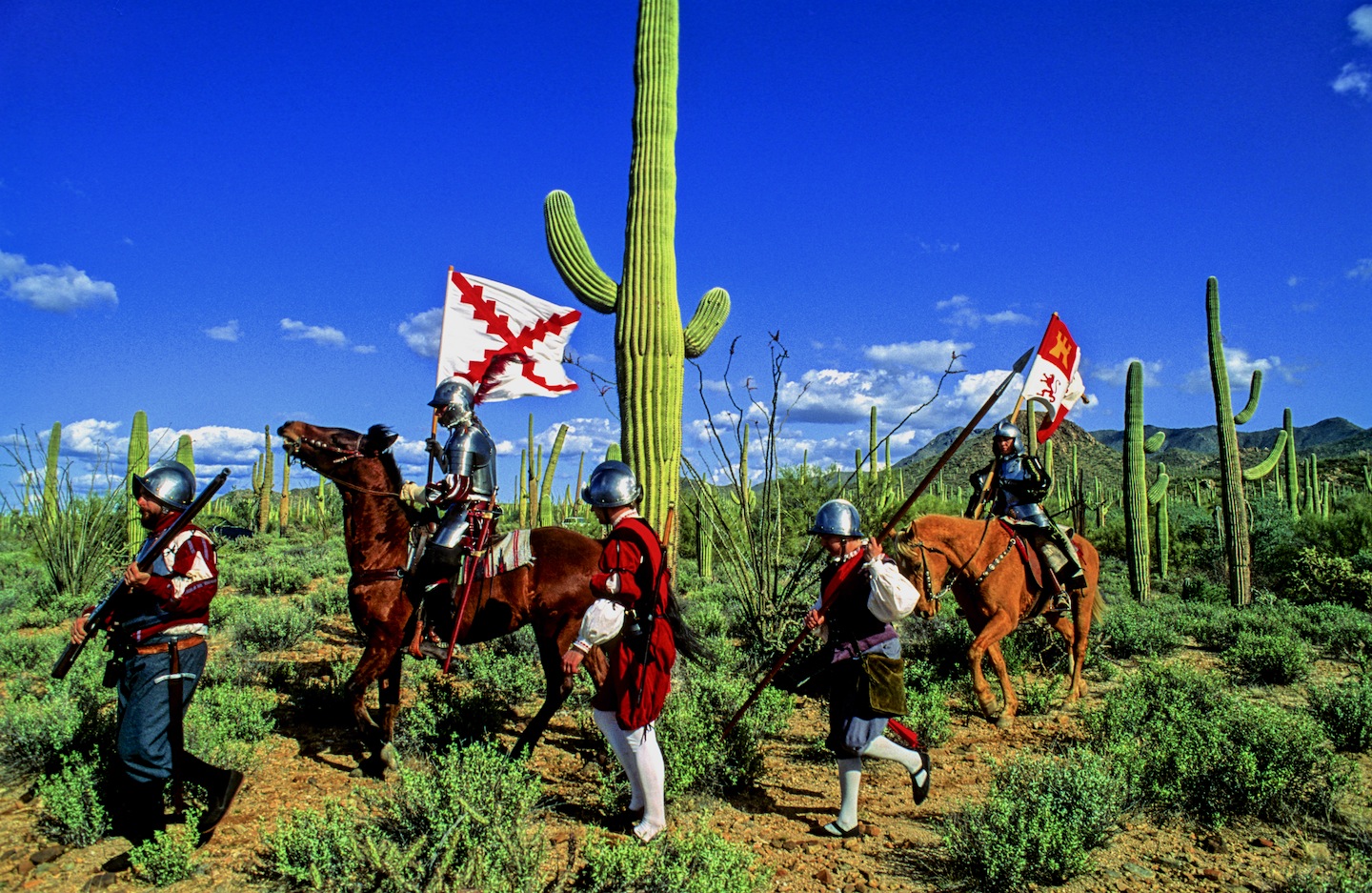
Scholars say there were 2,000 in the expedition, with 67 plus European soldiers-45 fellas carried European metal helmets, 1300 natives were from central and western Mexico, some were servants, wranglers and herdsmen so writes Richard Flint in the Kiva article entitled “What they never told you about the Coronado Expedition”. He points out there were 19 crossbow, 25 arquebusiers and additional slaves to tend the 1,000 extra horses, 500 head of cattle, and more than 5,000 sheep was taken to feed the expedition. These folks were not trailblazers-they followed well established paths, each village they passed they would enlist guides to lead the way to the next water hole, to make introductions at the next village and to show the Spanish the road to the Seven Cities of Gold.
Just a few years earlier the chosen champion of the Cuban governor, Conquistador Hernando de Soto, who learned the Indian slave trade in South America. There the Spanish looted temples and ransacked graves for their mortuary offerings. Finally De Soto captured the Inca emperor who offered him a room 22′ by 17′ stacked 9′ to the ceiling with gold ornaments, vases, goblets and statues plus another smaller room filled twice over with silver for his freedom. De Soto accepted the gold and silver treasure, still killed the king and soon returned to Spain and became a favorite in the King’s court to whom he loaned money and soon was given the license to explore Florida. In return the King was to receive “one-fifth of all spoils of battle, one-fifth of any precious metal taken from the ground and one-tenth of everything taken from graves. De Soto was to finance the entire expedition, at its end he would received 50,000 acres of his choice and an annual salary of $60,000, in return he would pacify all the natives, and provide the necessary priests and friars needed to convert them.

DESOTO; Followed the footsteps of his heroes, Balboa and Ponce de Leon….
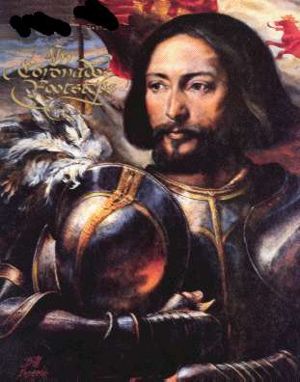
CORONADO: Freely joined the chase for gold and riches ….
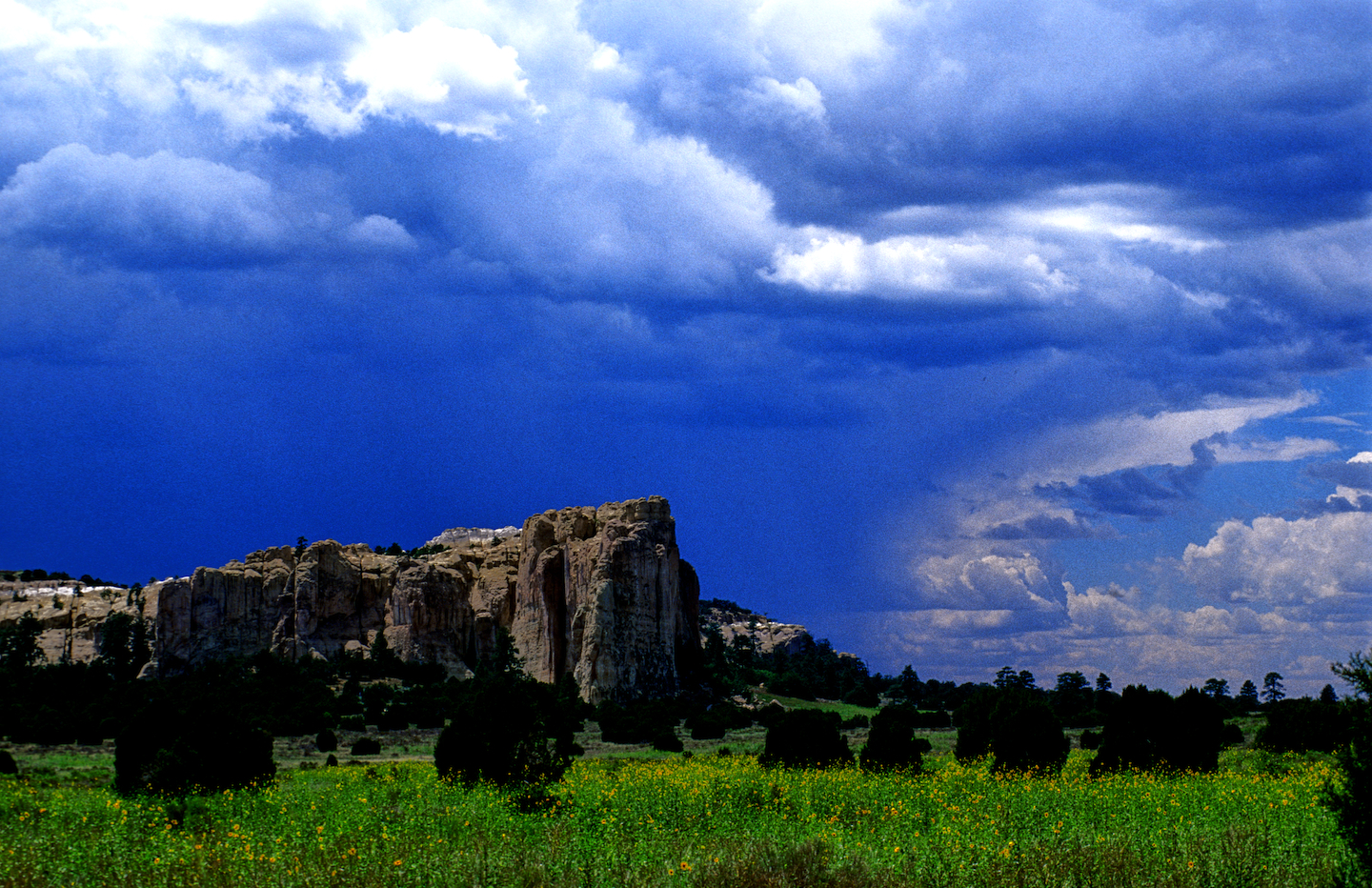
EL MORRO NATIONAL MONUMENT STOOD OUT FROM THE FLAT LAND AND BECAME A BEACON FOR TRAVELERS. CORONADO DIDN’T LEAVE HIS JOHN HANCOCK, BUT HE DID VISIT

The native Americans believed the Spanish horses were supernatural creatures.
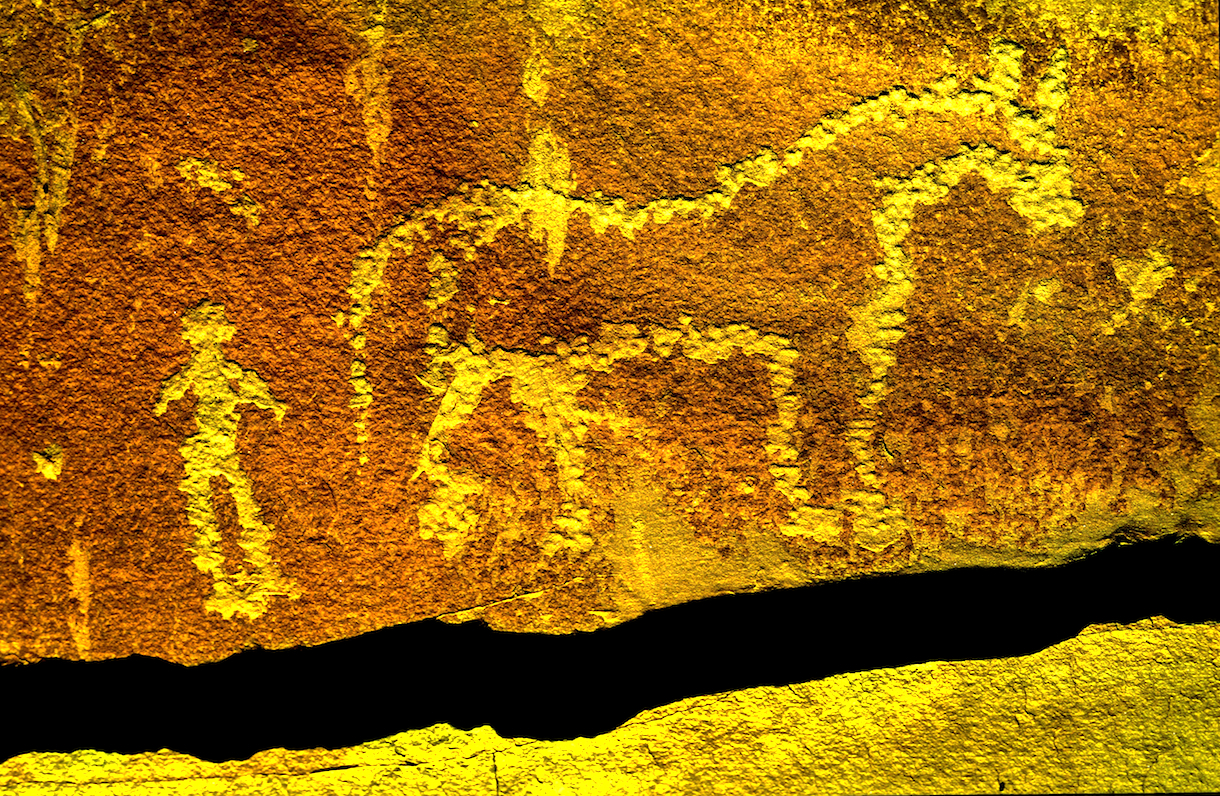
This rock art in southern Utah commemorates the first time the indian and the horse meet.
So eighty years before the Pilgrims landed at Plymouth Rock. Spanish Explorers visited Kansas: Francisco Vasquez de Coronado, seeking gold in New Mexico, was told of Quivera where “people’s pots and pans were beaten gold”. With 30 picked horsemen and a Franciscan Friar, Coronado marched “north by the needle” from the Texas panhandle until he reached Kansas. Here he found no gold, but a country he described as “the best I have ever seen for producing all the products of Spain.” The expedition entered present Kansas near Liberal and moved northeastward across the Arkansas River to what is now Rice and McPherson counties perhaps probing to present day Lawrence near the Kansas River before turning back. The guide, they called the Turk, confessed he had deceived the Spaniards and one night he went into his tent and the next morning when they broke camp he left only a dirt mound. He was strangled, buried and forgotten. For 25 days in the summer of 1541 the Turk had led Coronado among the grass-hut villages of the Quivira Indians, hoping to lose Coronado and men in the tall grass and waterless plains.

PECOS PUEBLO stood at the Cross Roads of the Great Plains and the Rio Grande Pueblo Communities.
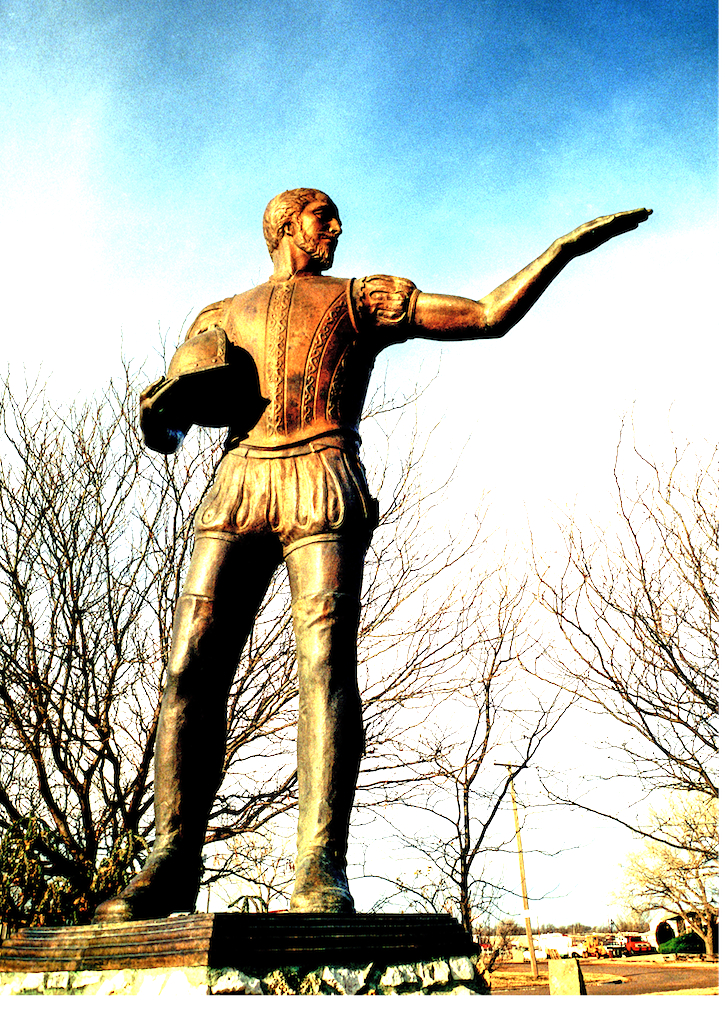
Statue of the Conquistador Coronado stands next to a traffic circle in Liberal, Kansas near where the Spanish entered from Texas. JOHN MADSEN, BELOW
CORONADO AND QUIVIRA

The exact route that the Coronado Expedition took between Sonora and the Zuni Pueblos is currently unknown writes John Madsen, curator at the Arizona State Museum. He writes some have surmised that the trail led through Arizona, as far west as the Casa Grande Ruin, before turning northeast into the White Mountains region. Others, like historian Herbert E. Bolton, suggest a route along the San Pedro River, turning northeast below Benson, crossing the Gila River near Bylas, and passing near White River and Springerville before descending into the Zuni region. Madsen prefers the path similar to that proposed by archaeologist Carroll Riley. It traverses the country on what is now the Arizona–New Mexico state line, following the San Francisco River. Spanish accounts as early as 1747 reveal considerable use of the drainage by Zunis and Apaches. In 1795, Sonorans viewed the San Francisco River area as a potential trade route linking them with the Pueblo of Zuni and Santa Fe area pueblos like Pecos and Taos Pueblos.
Madsen teamed up with a Public Broadcast Station and launched a search for clues of where the Spanish had been targeting areas along their suspected route. Many historians and archaeologists along the route have tackled their piece of the mystery, many adding to the research, Madsen “had a hunch that the best source of information would come from the ranching communities along the Arizona–New Mexico border. These people know the land, and generations of family members have covered most of this dirt on horseback. The end result were 33 Spanish colonial period or Mexican historic artifacts like period spurs, coins, and horseshoes. Chain mail was take from a site in Kansas….more clues appeared.
Hartmann Map for Tracking the Expedition’s Route: Sleuthing for Clues and Artifacts

For over 100 years, the exact route of Coronado has been an American mystery. Generations of scholars have tried to retrace the steps of the army from their descriptions of villages, rivers, mountains, and native communities. National commissions have grappled with the problem of designating a “Coronado Trail” that tourists could follow, but clues were sparse, and politics raised its head when various factions tried to claim parts of the route for their state. Because we don’t know just where they were, it is tantalizingly hard to interpret the Coronado chronicles’ descriptions of native villages and other sites they visited.

GREENLEE COUNTY ARIZONA
Archaeologists William K.Hartmann, his wife Gayle and Richard Flint have worked tirelessly to sleuth out the route of the Coronado Expedition being guided by de Niza who the year before had seen Cibola from a distance. They found he might have followed the Rio Sonora to the river’s headwaters and then crossed the Cananea grasslands for four days past Arizape picking up the San Pedro River North turning east toward the Wilcox Playa North past present day Safford or the present day Sulfur Springs Valley crossing the Gila River cresting the Mogollon Rim past Point of Pines. William and Gayle Hartmann sees them moving east from the San Pedro, stopping at Turkey Creek in the Chiricahua’s then moving east through Apache Pass via Portal and into New Mexico and eventually into Texas. For more explanation visit their website….http://www.psi.edu/epo/coronado/coronadosjourney.html
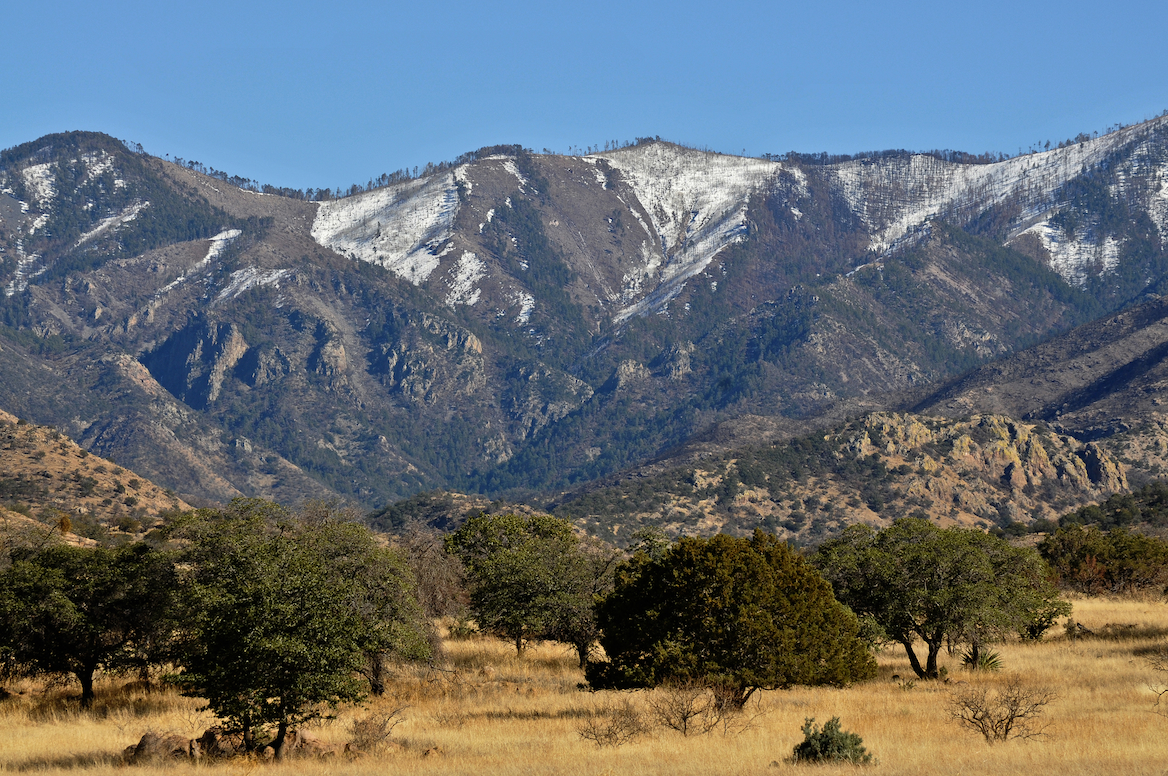
WEST TURKEY CREEK, IN THE CHIRICAHUA MOUNTAIN RANGE, ONE PROPOSED STOP ALONG CORONADO’S ROUTE.
REPORTED DISCOVERY OF CHICHILTICALE The most exciting development is the apparent discovery of the long lost Coronado camp site at the Chichilticale New Mexican exploration geologist Nugent Brasher devoted several years to this problem. With brilliant deduction, mapping, and hard work, he began metal detecting surveys at several water-source sites he reported finding an iron cross bow point and other possible fragments from the Kuykendall ruin, a large pueblo ruin site at the foot of the Chiricahuas. The site appears definitely to be a the first Coronado camp site known in Arizona, and almost certainly is the Chichilticale ruin.
• ONGOING EXCAVATIONS AT CHICHILTICALE Brasher has set up a web site at www.chichilticale.com to record progress with the survey and excavations at the Chichilticale site. Excavations are continuing by Brasher and archaeologist Deni Seymour. Two more cross bow bolt heads have been shown on her web site that details excavation plans and progress, at http://www.seymourharlan.com/default.htm
• NEW BOOK FROM RICHARD FLINT In 2008, Richard Flint published a popular-level account of the expedition, “No Settlement No Conquest: A History of the Coronado Entrada,” a book that bids to replace Herbert Bolton’s volume as the best general account of the expedition.
• NEW BOOK FROM TONY HORWITZ In 2008, also, Pulitzer-prize winning journalist/writer Tony Horwitz dealt with the Coronado expedition as a major section of his book “A Voyage Long and Strange,” which is an account of the explorations in North America before the 1700s, adjusting and correcting some of the mythic tales that most American children learn about the initial European explorations of our continent.
Picked up by a local rancher In the 1960s and Little known for years, the Floydada gauntlet and some newly-found associated artifacts, such as odd-shaped metal arrow points, have recently been recognized as priceless relics of the Coronado army expedition.
THE JIMMY OWENS SITE IS LOCATED NEAR FLOYDADA ON THE TEXAS PANHANDLE SEE PICTURES OF COLONIAL SPANISH ARTIFACTS, SPURS, MESH GLOVE…
KIVA The Coronado Expedition to Tierra Nueva: The 1540–1542 Route across the Southwest by Richard Flint; Shirley Cushing Flint
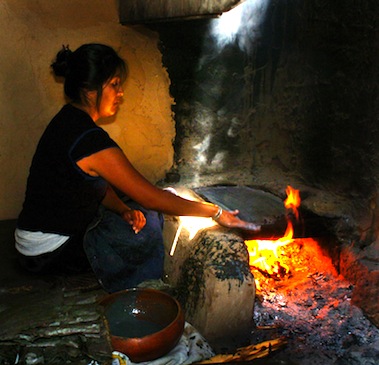
HOPI WOMEN have been making the ceremonial PIKI Bread for centuries in a special cooking space behind the main house

AFTERMATH of DE NIZA’S JOURNEY TO CIBOLA
Cultures, old as time, were attacked as pagan by the Catholic priests who accompanied the Conquistadors and who blessed their cruel attacks, in the name of saving pagan souls. The vanquished Indian was used as slaves, sold, slain or simply worked to death. The Cross, the symbol the Spanish brought the Indian and who adopted it, as pagans you can always use another God. Finally, the Spanish opened the West, the Conquistadors began the mapping of the West which became the United States of America’s quest for it’s “manifest destiny”. The American Indian, time and time again found himself in the way of the white man’s greed, the white men attacked the first Americans stealing their lands, their game and their lives, their homes, eventually they stole their children!
The facts show the journey of FRAY MARCUS de NIZA, a man of God, began an “era of extermination”, a period when approximately 20 million Indians inhabited this territory before the Conquest, and after just one century of Spanish rule there were only 1 million left! Many vanquished by Old World diseases brought to the New World with Europeans. The epidemics that broke out as well as the merciless workload imposed on the Indian dramatically diminished the Indian population. The scope of the epidemics over the years was tremendous, killing millions of people—in excess of 90% of the population in the hardest hit areas—and creating one of “the greatest human catastrophe in history, the most devastating disease was smallpox, but other deadly diseases included typhus, measles, influenza, bubonic plague, cholera, malaria, tuberculosis, mumps, yellow fever, and pertussis (whooping cough). The Americas also had a number of local diseases, such as tuberculosis and a type of syphilis, which soon went viral when taken back to the Old World.
“The moving multitude…darkened the whole plains,” wrote Lewis and Clark, who encountered a buffalo herd at South Dakota’s White River in 1806. With westward expansion of the American frontier, systematic reduction of the plains herds had began around 1830, when buffalo hunting became the chief industry of the plains, organized hunters killed buffalo for hides and meat, often killing 250 a day.

The White Man also almost exterminated the American Buffalo, herds said to be 20 miles wide and 20 miles deep, roaming the valleys they have always grazed, only a few small herds survive today. At that time, some white men sought to eradicate the buffalo to take away the Indian’s livelihood and well-being. Native American tribes depended on the buffalo’s meat and hides, and many still today believe the animal has special spiritual and healing powers, making it an important part of their culture. The railroads laying track across the plains further depleted the buffalo, as well as the Indian’s hunting grounds because hunting from train windows was widely advertised and passengers shot buffalo as they raced beside the trains. By 1883 both the northern and the southern herds had been destroyed. Less than 300 wild animals remained in the U.S. and Canada by the turn of the century out of the 30 to 75 million that was once thought to live there.
The Navajo “Long Walk” was the 1864 forced-deportation and some say attempted ethnic cleansing of the Navajo by the U.S. Government notes Wikipedia. The Navajos were forced to walk at gunpoint from their Arizona reservation to eastern New Mexico. Some 53 different forced marches occurred between August 1864 and the end of 1866. The “Trail of Tears” is a name given to the forced relocation and movement of Native American nations from southeastern parts of the United States Many of re-settled Indians suffered from exposure, disease and starvation on the way, many died, including 4,000 of the 15,000 relocated Cherokee. By 1837, 46,000 Native Americans from southeastern states had been removed from their homelands opening 25 million acres for predominantly white settlement.
SOUTHWESTPHOTOBANK’S PREHISTORY PHOTO GALLERIES CLICK HERE….
CONQUISTADOR ARMOUR BY ERIC THING
<a href=" SPANISH TRANSLATIONS:
RON BARBER WINS ARIZONA’S SECOND CONGRESSIONAL DISTRICT: ELECTION NIGHT BRINGS PRESIDENT OBAMA HOME WITH EXHALTATION AND SUDDEN DEATH FOR REPUBLICANS


RON BARBER HAS WON THE SOUTHERN ARIZONA HOUSE SEAT VACATED BY GABBY GIFFORD WITH A SLIM 2300 VOTE LEAD SAID THE AP. THE VOTE WAS CALLED WITH A NUMBER OF BALLOTS YET TO BE COUNTED.
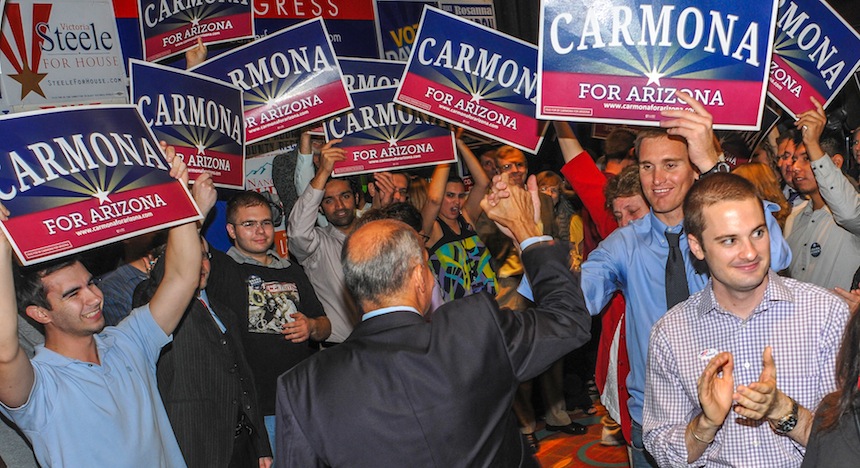

VICTORIA STEEL AND HER SON NICK CELEBRATE HER TAKING 34.80% OR 42141 VOTES WITH ETHAN ORR GETTING 33.50% WITH 40542 VOTES WHILE MOHUR SARAH SIDHWA TOOK 31.40% OR 38064 VOTES.

Spectators at the University Marriott Hotel turned out for the Pima County Democrats Watch party and the evening was quiet until Obama brought home the Electorial College and sent the Republicans home early
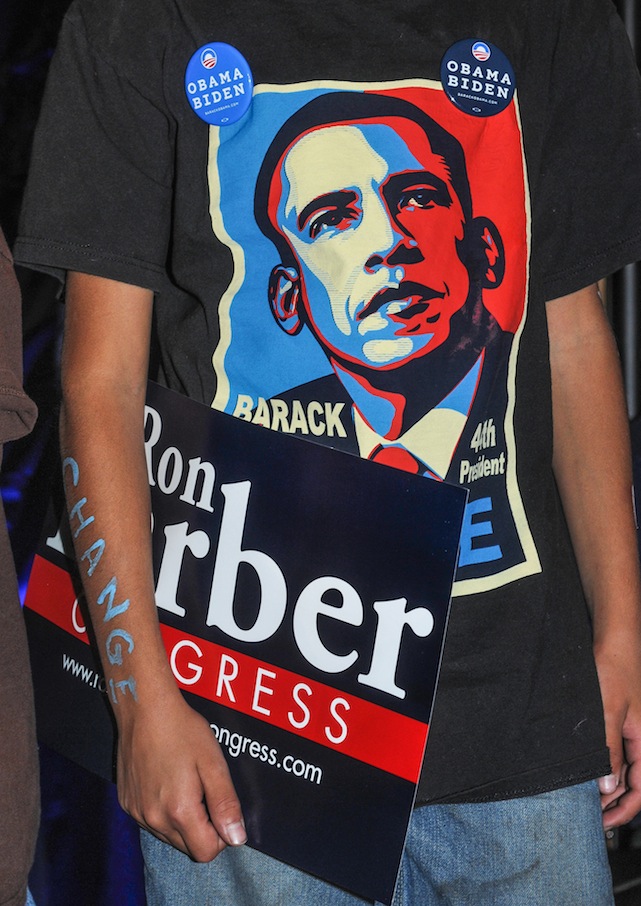
HOPE IS THE AGENT OF CHANGE

COUNTY VOTE TALLIES COME IN SLOW AND STEADY

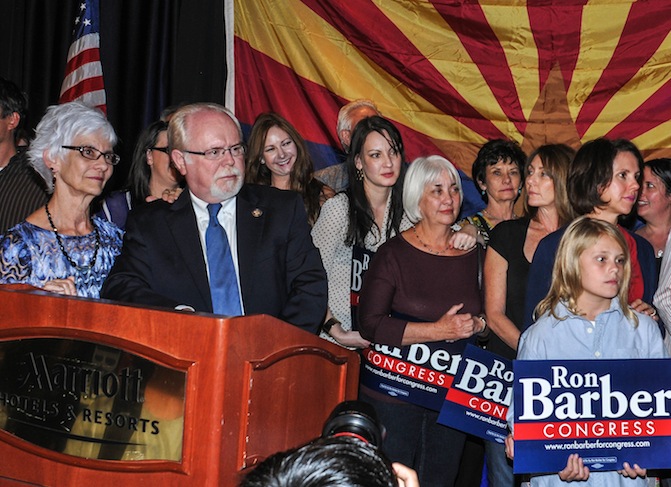
A WEEK AFTER THE ELECTION THE TOTAL COUNT IS STILL OUT ON THE RON BARBER VS MARTHA McSALLY RACE AND FINAL VOTE COUNTS ARE A WEEK OFF. TEAM BARBER HAS EXPRESSED CONFIDENCE FROM DAY ONE.


FORMER SURGEON GENERAL RICHARD CARMONA RECEIVED 942,427 VOTES OR 45.76% OF THE VOTE AND JEFF FLAKE, JEFF TOOK 1,023,493 VOTES OR RECEIVED 49.69%
MORE RON BARBER PHOTOS CLICK HERE
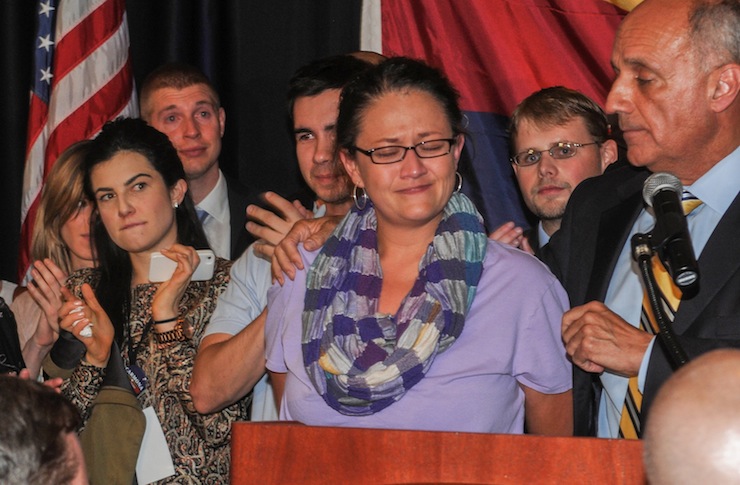
RICHARD CARMONA THANKS HIS CAMPAIGN STAFF FOR THEIR HARD FOUGHT BATTLE
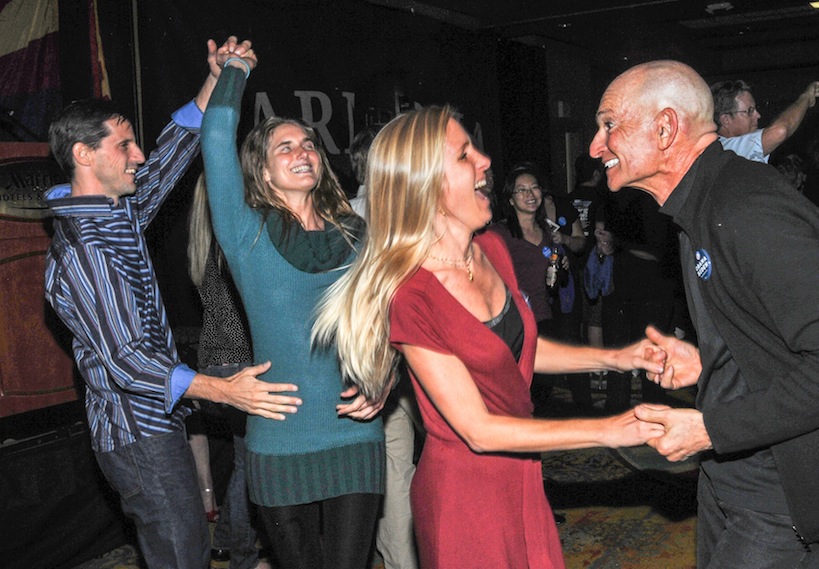
INSPITE OF THE 929,422 DEMOCRATIC VOTES OR 43.96% OF THE VOTE IN ARIZONA GOING TO PRESIDENT OBAMA, GOVERNOR MITT ROMNEY GOT 1,141,974 VOTES TAKING 54.02% TO KEEP ARIZONA A RED STATE. STILL OBAMA CARRIED 332 ELECTORIAL VOTES OVER ROMNEY’S 206 SENDING REPUBLICANS TO BED EARLY.

AT THE END OF THE EVENING DEMOCRATS FIND PLENTY TO CELEBRATE AND DANCE THEIR WAY OUT THE DOOR
<a href=" SPANISH TRANSLATIONS:
TUCSON’S 2012 DAY OF THE DEAD PROCESSION DRAWS RECORD FAMILY CROWD TO DEADLY EVENT


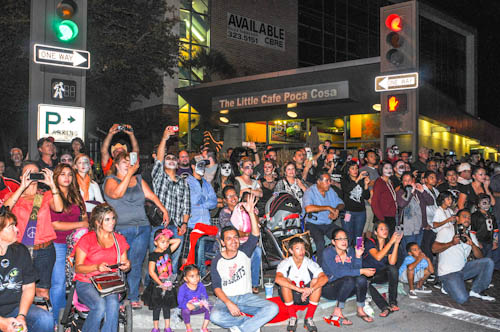


CLICK HERE FOR SOUTHWESTPHOTOBANK DAY OF THE DEAD GALLERY FOR 2012
CLICK HERE FOR DAY OF THE DEAD GALLERY FOR 2011
CLICK HERE FOR DAY OF THE DEAD GALLERY FOR 2010</a
<a href=" SPANISH TRANSLATIONS:




 SOUTHWEST PHOTO JOURNAL